The size of your firm has no bearing on the amount you can charge clients.
Now if you have read the above quote and thought to yourself “of course the size of your firm has no bearing on the amount you can charge clients, clearly Smith has lost it again!“, then bear with me.
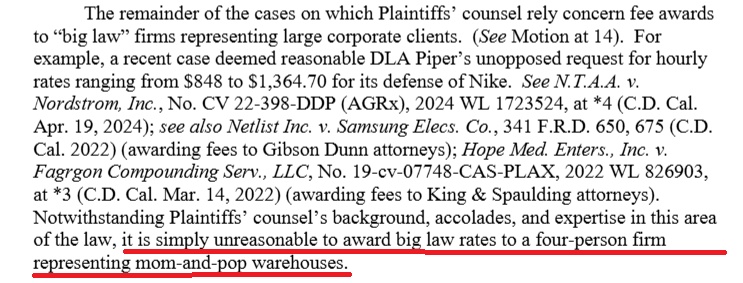
In a recent matter before the Central District of California, the Honorable Michael W Fitzgerald disagreed with the notion that the size of a law firm should have no bearing on the amount you can charge clients when he stated:
“it is simply unreasonable to award big law rates to a four-person firm representing mom-and-pop warehouses.”
In what is otherwise far reaching commentary on the history and application of the billable hour (well worth a read in itself), Fitzgerald’s ruling is troubling; not least because it is based on a premise that bigger means better — and better means more expensive. Now that could be true. But it doesn’t make it so.
Conversely, should I, as a client, be happy to pay more because the attorney acting on my matter works in a firm that has seven floors over one that has one? Surely the answer here is “no”, I’m paying for outcomes over inputs.
But that’s not the case here. If we follow Fitzgerald’s reasoning in this case, the real drivers of price: (a) Perceived expertise and relevance; (b) Client experience and accessibility; and (c) Outcome certainty and risk management, are certainly consideration, but no longer primary.
Clio’s 2025 Legal Trends Report for Mid-Sized Law Firms provides a comprehensive look at how mid-sized law firms in the US are adapting to industry changes; particularly as it relates to AI adoption, billing models, client acquisition, and technology investments.
Although the results are based on data from US-based firms, the results are arguably applicable here in Australia and more broadly so here’s a summary of the key takeaways:
🚀 AI Adoption & Transformation
Mid-sized firms (20+ employees) are now leading AI adoption in legal tech, surpassing smaller firms.
93% of surveyed professionals in these firms use AI, with 51% using it widely or universally.
Common AI tools include legal research platforms, document automation, eDiscovery, and predictive legal analytics.
AI is viewed as a way to increase efficiency, reduce costs, and improve client engagement.
💰 Billing Models & Pricing Trends
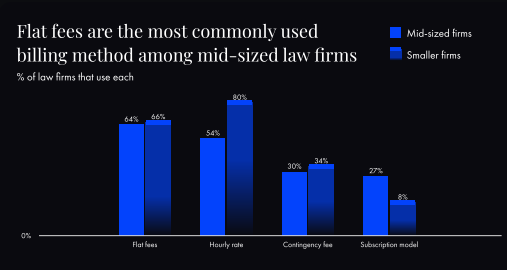
Flat fees are now the most common billing method among mid-sized firms, outpacing hourly rates.
Firms are shifting away from hourly billing due to AI’s impact on time-based work and client preference for predictable pricing.
Subscription models are also gaining traction, especially for ongoing legal services to business clients.
Despite the shift, hourly billing remains prevalent, particularly with highly varied rates by role and experience.
📈 Client Acquisition & Marketing Strategies
Mid-sized firms use multiple marketing channels: websites, SEO consultants, social media, online reviews, and referrals.
They’re less reliant on referrals than smaller firms, but invest more in digital marketing.
Tools like e-signatures, intake forms, and online scheduling directly improve conversion rates and revenue (up to 20% higher).
Chatbots are underused despite 51% of clients finding them helpful—a missed opportunity.
💸 Spending & Technology Investments
Staff salaries dominate expenses (41%), followed by rent, marketing, and office costs.
Mid-sized firms spend less on office expenses (5%) than solo and smaller firms, due to economies of scale and flexible work arrangements.
Spending on software and professional fees is rising rapidly—showing a strong focus on tech and professional development.
☁️ Cloud Technology Adoption
Mid-sized firms lag behind smaller firms in cloud adoption (only 38% vs. 71%).
Firms with 20–49 employees are more likely to use cloud tools than larger mid-sized firms.
Hesitation around switching legacy systems or internal decision-making bottlenecks may be holding back adoption.
🧭 Strategic Takeaways
Mid-sized firms embracing AI + modern billing models + tech investments are poised to outpace competitors.
The real threat isn’t automation—it’s firms that adapt faster.
Cloud-based tools, client intake tech, and AI are critical for efficiency, growth, and client satisfaction.
The latest Law Society (England and Wales) Financial Benchmarking Survey has sparked significant discussion on social media today. The findings highlight some critical financial challenges for mid-sized law firms, particularly in terms of profitability, chargeable hours and cash flow management.
📊 Top 3 Key Findings:
1️⃣ Fee Earners’ Costs vs. Fees Charged
The median hourly cost of a fee earner (based on 1,100 chargeable hours) was £123.40, while the median hourly fees per fee earner stood at £133.01.
🔴 93% of fees earned are being used to cover costs, leaving minimal margin for profitability.
2️⃣ Shortfall in Chargeable Hours
The average recorded chargeable hours per fee earner increased slightly to 773 hours (up from 765 in 2023).
⚠️ However, this is still well below the 1,100-hour target—a shortfall of over 300 hours per year per lawyer.
3️⃣ Increase in Lock-Up Days
Year-end lock-up days (including work in progress and debtors) rose from 143 to 146 days.
This trend indicates longer cash flow cycles, which can put pressure on a firm’s financial stability.
🚨 What Should Law Firms Do?
These figures underscore the urgent need for better financial planning, sustainable profitability strategies, and operational efficiency. Some key focus areas include:
✔️ Improving revenue streams—exploring retainer-based models for better income predictability. ✔️ Enhancing productivity—have a robust and actionable business development plan for all lawyers! ✔️ Optimise cash flow—reduce lock-up days by streamlining billing and collections processes.
📢 Looking to bridge the 300+ hour gap per lawyer? Or interested in strategies for growing a profitable legal practice sustainably? Let’s talk! Get in touch today.
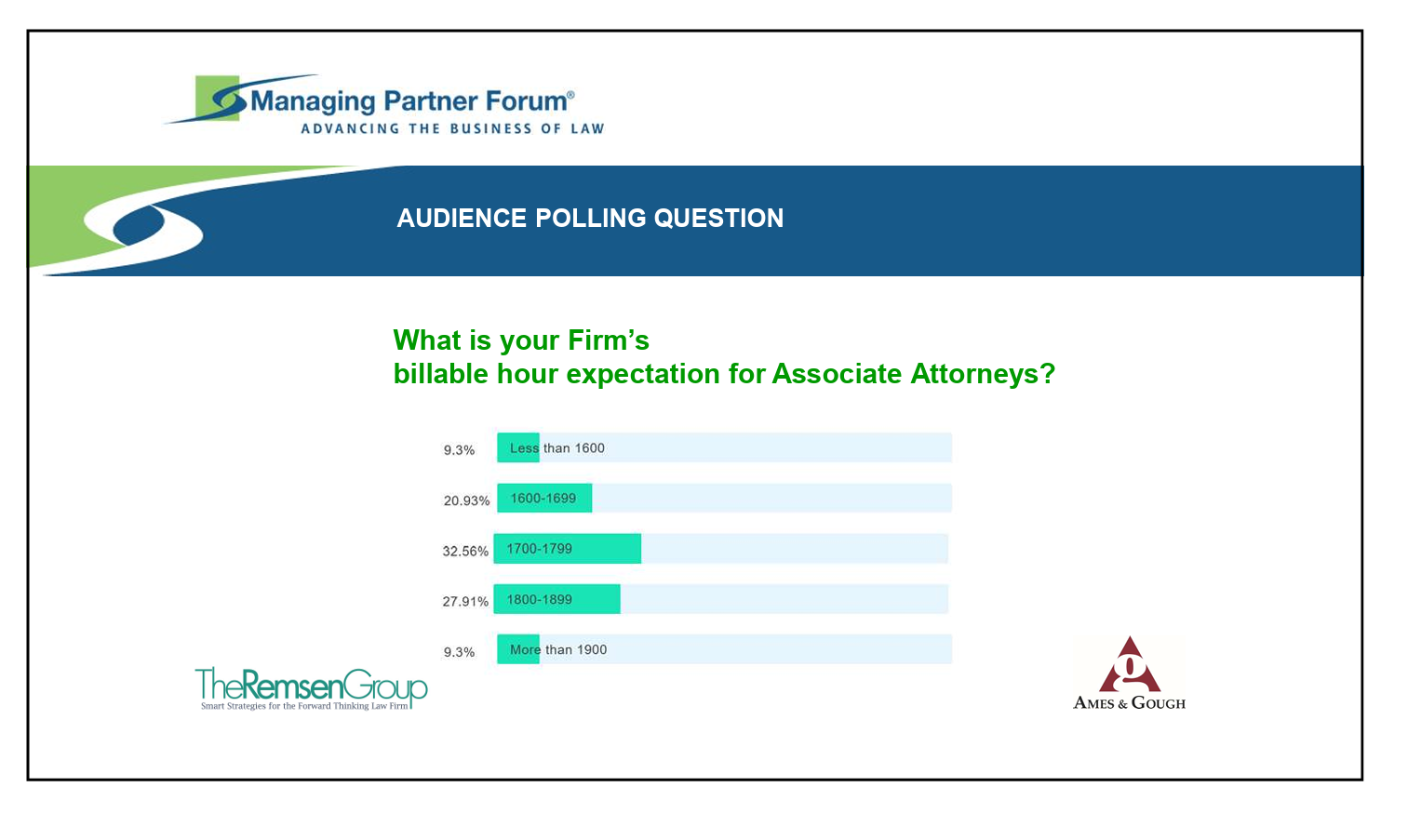
It’s interesting to note that nearly 70% of respondents expect their Associate Attorneys to bill over 1700 hours a year, with almost 10% expecting over 1900 billable hours per year.
That’s a lot of billable hours! And if we consider the ‘10-20-30-40 Leverage Rule‘, then the implication is very bleak for junior lawyers!
And as I say to those entering the legal profession who need some understanding of how many hours they need to work to meet their billable hour target, take a look at Yale Law School’s ‘The Truth About The Billable Hour‘.
While I am all for the profit motive, I maintain that if owners and managers of law firms want to understand why they have a high attrition / burnout rate in their teams, take a close look at what expecting someone to bill 1700 hours a year is actually doing to them!
I have read a lot recently about how AI and ChatGPT in particular is going to kill the billable hour. That may well end up happening. What I do suspect though is that it is unlikely to happen soon. And if the billable hour is to be killed off, technology – such as AI and ChatGPT – may well play a part, but it will be the cultural/behavioural change that’s needed that will be the final nail in this coffin.
Don’t believe me?
Here is a quote (of kinds) by Aarash Darroodi, Fender’s General Counsel, at the recent Legal Marketing Association’s annual gathering in Hollywood, Florida:
…the mere fact that he’s being billed by the hour isn’t a problem — but that the billable hour’s implementation can be.
In other words, Darroodi doesn’t mind that his law firm(s) charge him (his company) by the hour, but he does mind if you take him for a fool.
And until this mindset changes, you’re not going to see the death of the billable hour anytime soon.
Darroodi’s comments on the RFP process – should clients do an “open day” before tendering?
While Darroodi’s comments on the billable hour were interesting, his comments on the approach law firms should take to the RFP process were even more insightful. To quote from the article:
[Darroodi] described receiving template-based RFP responses from law firms — an approach he called “fundamentally a mistake.”
Instead, he would like to see a law firm respond to an RFP with an offer to come look at the company’s operations in-depth, gaining a better picture of his organization before a proposal is prepared.
“First of all, it shows initiative on your part. It shows the fact that you care,” he said. “And plus, it shows us that you’re going to submit something that’s directly related to our existing organization.”
Now I’m more than sure that not all GCs will take this approach. And before everyone in Australia says this would likely breach procurement protocols (after the RFP has been issued), I know.
But, wouldn’t it be interesting – and just a little more relevant, if clients did an “open day” before they issued the RFP? Particularly in cases where the tender is by invitation only?
In my view it would certainly make sense and would undoubtably result in more directly relevant and related (and probably eminently more readable) tender responses.
Not only is it highly insightful – so “thanks for posting it Jeremy”, but it contains this nugget – again from Darroodi – on his views about client events (and if you are anEvents Manager in a law firm, stop reading now 🤣):
“I don’t want to spend time with my lawyers,” Darroodi said to laughter, comparing the idea to hanging out with his dentist.
Ouch!
In the meantime, if you need help with your pricing or RFP responses, feel free to reach out to me.
Leaving aside the whole issue of whether or nor the billable hour is the best way to charge clients, do you think it is fair to charge different client different rates for the same work?
This article by Jordan Rothman on abovethelaw.com would suggest the answer to that question is – ‘yes’.
And I actually don’t disagree with Jordan’s outcome, but do disagree with his thinking of why.
After all, at least here in Australia, we very rarely have the same panel rate for all legal panels we are appointed to so; despite, or rather, the fact that we will be doing similar work under the various panel appointments.
QED – IMO – it’s fair to charge different clients different rates for the same work we do (and, HINT, it all comes out in the wash when you look at the Average Realised Rate – but I will leave that for another post).
But, and here is the critical difference I have with Jordan’s post, different clients will equate a different value to the work being done by you – and so it is more than fair to charge one client more or less than another client perceived on the value of the service they are getting.
For example, and I accept this is somewhat crude, somebody who has never been divorced before and whom your firm ‘looks after’ in a very emotional period of their life is way more likely to value the service your firm provides than someone going through their fifth divorce – so charge them more!
If you want to have a chat about how you can maximise your value opportunities, feel free to reach out.
If you missed it, last week TikTok owner Byte-dance announced that it was moving its employees away from their 996 work week to a new 1075 work week.
For the uninformed, which included me until last week, 9-9-6 required Byte-dance employees to work from 9am to 9pm 6 days a week. A time schedule that would make most lawyers blush. Fortunately for Byte-dance employees, their new – light-on – work schedule is 10-7-5, or from 10am to 7pm 5 days a week.
Clearly a step in the right direction when it comes to employee well-being and mental health.
Anyhow, I comment on this for three reasons:
First, Legal Cheek recently published a post that revealed the average working hours of junior lawyers in the UK. Of the 2,500 junior lawyers surveyed, junior lawyers at Kirkland & Ellis racked up the longest average working day, clocking on at a tardy 9:14am and off at 11:28pm. The survey is silent on whether this is a 5, 6 or 7 day week. I recommend you take a look at the full list, makes for rather sad reading (if junior lawyer mental health really is an issue of concern for the industry)
Second, last week the New York State Bar Association Task Force on Attorney Well-being suggested that there be a cap on billable hours at 1,800 hours per year.
The announcement had no less than Roy Strom comment on Bloomberg Law that:
Firms are too scared to impose a cap because it would be hard to hire the number of additional lawyers the cap would require. It would also put a huge dent in profits.
And
The billable hour serves as something of a measuring cup ambitious people pour themselves into. The unfortunate truth about Big Law is that it doesn’t have many alternative definitions of success.
If Roy’s comment is right, and it is an unfortunate truth that Big law has little alternative but to measure success by the amount of hours billed then, in my view, that is a really sad reflection of our industry. Because surely other metrics, such as the quality of the work provided and client satisfaction should have equal weighting. Not to mention churn and retention rates.
My third and last reason for commenting on all this is a personal one. I have long said that asking lawyers to work 2,000+ billable hours a year wasn’t a good thing – and there must be a reason why that is my most read post, so there is some comfort in seeing such an esteemed group as the New York Bar Association finally agree with me.
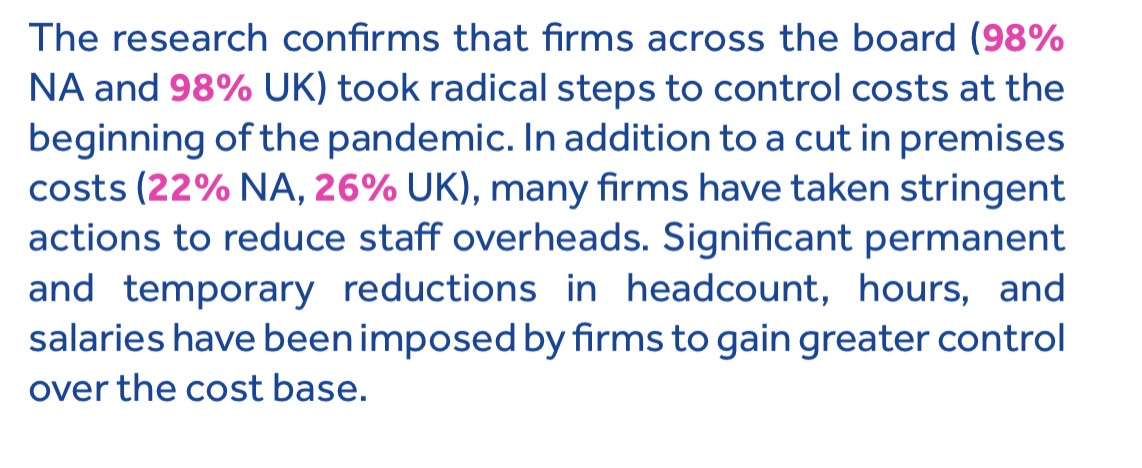
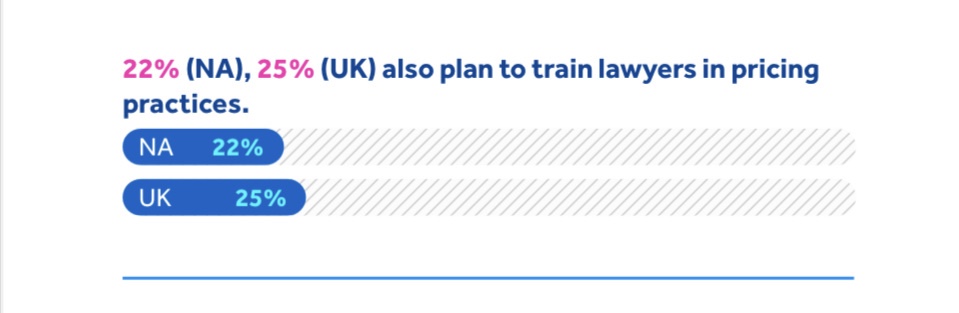
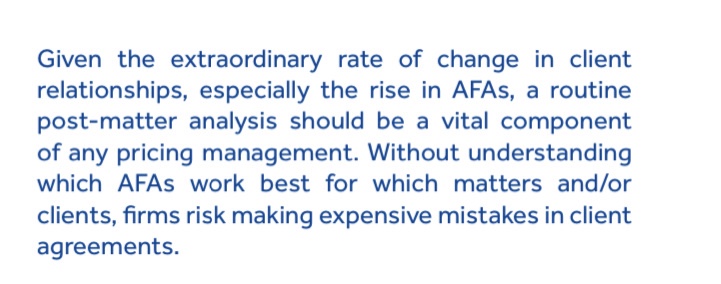
I’m a cynic, so usually read industry reports published by industry providers with a huge pinch of salt, but every now and then you get an exception to the rule. So is the case with BigHand’s recently published ‘The Legal Pricing & Budgeting Report’, which is full of really insightful information (so read it!).
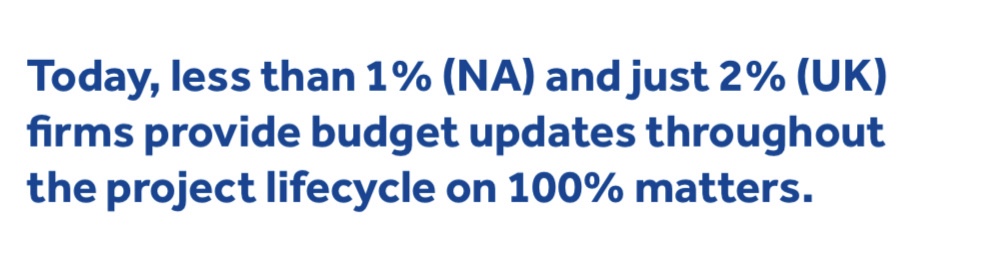
Here are my 10 take-outs (NA = North America and UK = UK):-
From
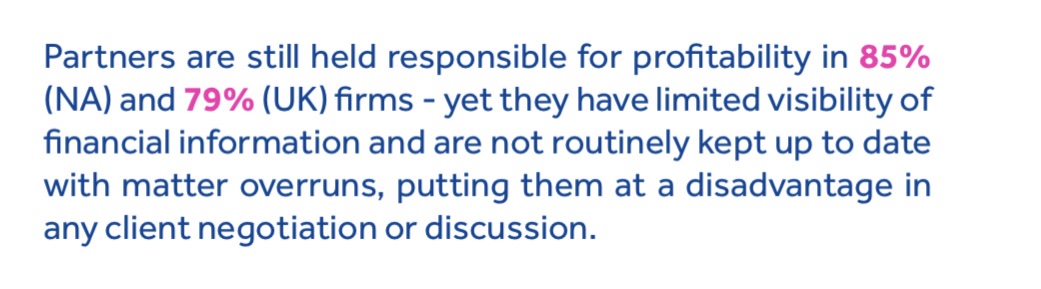
The damning:
1.
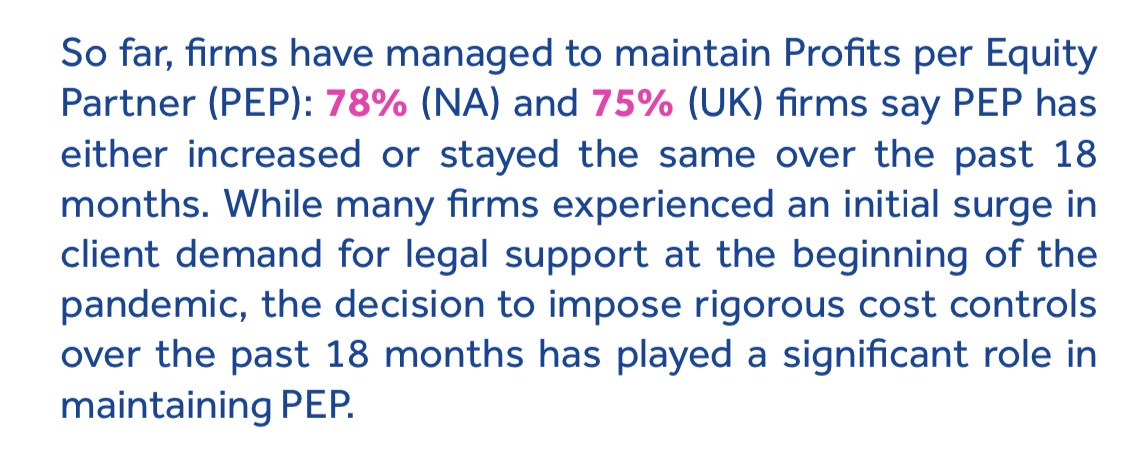
To the surprising:
2.
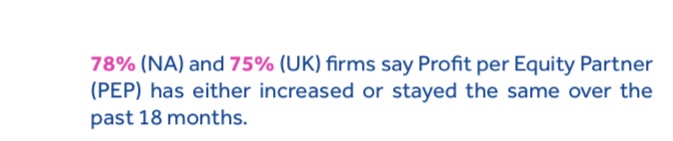
3.
To some obvious:
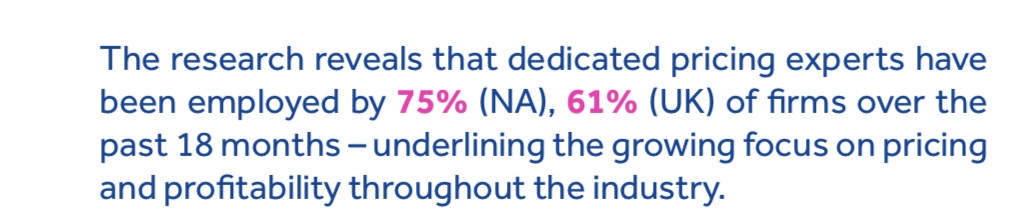
4.
5.
And some knowns:
6.
7.
With a few, “What the?” (as in, only…)
8.
9.
With a great conclusion:
10.
As I said, as a rule I don’t recommended reading these types of reports as they typically are a waste of time; but this is one I have no problem saying “go read it!” – and if you have any thoughts/comments, post them in the comments section below!
‘What would be some of the things I would want to be looking out for in a law firm’s invoice?
So here’s a quick list of my 10 things, but feel free to add your own 🤪 :-
Being charged [for]:
Expenses/disbursement – especially if they are unaccounted for (and particularly on fixed fee matters)
Travel time – especially if your lawyer is in the same town/city as you
‘Reading in’ time – especially when a new lawyer joins the team because one of the original team members has resigned or left the team
Team meetings to discuss your case/matter
Multiple lawyers attending the same meeting – especially if they have different time eateries
‘Out of scope’ work without a corresponding change order
Block billing of numerous tasks without explanation
Promotions – charge-out rates being increased for lawyers on your case because they have gain an additional year of post-qualified experience without adding any additional value
‘Bill padding’/‘Rounding up’ – when your lawyer rounds their time up to the next billable unit
‘Stickiness’ – where senior lawyers are doing work on your file that could be easily have been done by more junior lawyers, but they do it because they need to meet their internal billable targets.have different time.
As I say, feel free to add some of your own in the comments.










 RWS_01's B[D]log