Very sage advice from Seth Godin today for any new partners recently made up in the July promotions here in Australia, or anyone trying to do business development in today’s crazy world for that matter:
The first thing to do when thinking about starting a project, before you invest in systems design, infrastructure or fancy tools, is to practice getting some customers. And the second thing to do is to find out what it’s like to delight or disappoint those customers.
As always, feel free to reach out to me for a chat if you’re struggling to get to grips with this issue.
It’s that strange time of the year when we start all over again as if the previous 12 months didn’t happen. Only it is not quite as simple as that. From today:
most lawyers will be charging clients 10% or more extra for their services, with little or no explanation about where the extra value is being delivered and with the new fee rate being completely and totally justified by the date in the calendar and CPI rate increases.
judging by the LinkedIn notifications I have been receiving, a fair number of lawyers will be promoted to new roles – “congrats all”. Along with those promotions comes increased fees charged to clients!
So while we are all enjoying the various EOFY parties over the next few weeks, or simply enjoying some downtime over the school holidays: keep in mind that you need to have a carefully crafted value message to explain to your clients why you justify that higher fee rate; and if you want to ensure that your realisation rate stays healthy I suggest it be better crafted than “we are in a new financial year”.
And if you are struggling with any of that, feel free to reach out to me for a chat.
I have read a lot recently about how AI and ChatGPT in particular is going to kill the billable hour. That may well end up happening. What I do suspect though is that it is unlikely to happen soon. And if the billable hour is to be killed off, technology – such as AI and ChatGPT – may well play a part, but it will be the cultural/behavioural change that’s needed that will be the final nail in this coffin.
Don’t believe me?
Here is a quote (of kinds) by Aarash Darroodi, Fender’s General Counsel, at the recent Legal Marketing Association’s annual gathering in Hollywood, Florida:
…the mere fact that he’s being billed by the hour isn’t a problem — but that the billable hour’s implementation can be.
In other words, Darroodi doesn’t mind that his law firm(s) charge him (his company) by the hour, but he does mind if you take him for a fool.
And until this mindset changes, you’re not going to see the death of the billable hour anytime soon.
Darroodi’s comments on the RFP process – should clients do an “open day” before tendering?
While Darroodi’s comments on the billable hour were interesting, his comments on the approach law firms should take to the RFP process were even more insightful. To quote from the article:
[Darroodi] described receiving template-based RFP responses from law firms — an approach he called “fundamentally a mistake.”
Instead, he would like to see a law firm respond to an RFP with an offer to come look at the company’s operations in-depth, gaining a better picture of his organization before a proposal is prepared.
“First of all, it shows initiative on your part. It shows the fact that you care,” he said. “And plus, it shows us that you’re going to submit something that’s directly related to our existing organization.”
Now I’m more than sure that not all GCs will take this approach. And before everyone in Australia says this would likely breach procurement protocols (after the RFP has been issued), I know.
But, wouldn’t it be interesting – and just a little more relevant, if clients did an “open day” before they issued the RFP? Particularly in cases where the tender is by invitation only?
In my view it would certainly make sense and would undoubtably result in more directly relevant and related (and probably eminently more readable) tender responses.
Not only is it highly insightful – so “thanks for posting it Jeremy”, but it contains this nugget – again from Darroodi – on his views about client events (and if you are anEvents Manager in a law firm, stop reading now 🤣):
“I don’t want to spend time with my lawyers,” Darroodi said to laughter, comparing the idea to hanging out with his dentist.
Ouch!
In the meantime, if you need help with your pricing or RFP responses, feel free to reach out to me.
Leaving aside the whole issue of whether or nor the billable hour is the best way to charge clients, do you think it is fair to charge different client different rates for the same work?
This article by Jordan Rothman on abovethelaw.com would suggest the answer to that question is – ‘yes’.
And I actually don’t disagree with Jordan’s outcome, but do disagree with his thinking of why.
After all, at least here in Australia, we very rarely have the same panel rate for all legal panels we are appointed to so; despite, or rather, the fact that we will be doing similar work under the various panel appointments.
QED – IMO – it’s fair to charge different clients different rates for the same work we do (and, HINT, it all comes out in the wash when you look at the Average Realised Rate – but I will leave that for another post).
But, and here is the critical difference I have with Jordan’s post, different clients will equate a different value to the work being done by you – and so it is more than fair to charge one client more or less than another client perceived on the value of the service they are getting.
For example, and I accept this is somewhat crude, somebody who has never been divorced before and whom your firm ‘looks after’ in a very emotional period of their life is way more likely to value the service your firm provides than someone going through their fifth divorce – so charge them more!
If you want to have a chat about how you can maximise your value opportunities, feel free to reach out.
“As of April 03, 2023, the subscription fee for Microsoft 365 Family will change from AUD 129 to AUD 139 to address changing market conditions.”
Microsoft email notification 19 March 2023
Okay, not a huge increase. But:
absolutely no explanation or detail as to what those “changing market conditions” are.
no explanation about the additional value being provided.
no detail about any additional costs being incurred.
no information provided around whether the scope of services provided will change.
Other than to say: “if you don’t like this increase, here is a link to unsubscribe”, absolutely nothing.
My take:
a really badly drafted email to loyal subscribers (I think my family have subscribed to Microsoft 365 Family for around 10 years).
a missed opportunity to set out all the great features that Microsoft 365 Family provides – and there really are a lot -and why paying AUD 10 per year more will be worth it at the end of the day (after all, this is less than AUD 1 per month).
TIP
If, like me, you got this email can I suggest you file this away as an example of how NOT to communicate a price increase to your clients/customers.
And if you need help talking through how you might be able to do a much better job than Microsoft have in communicating price increases to your loyal clients, feel free to reach out:
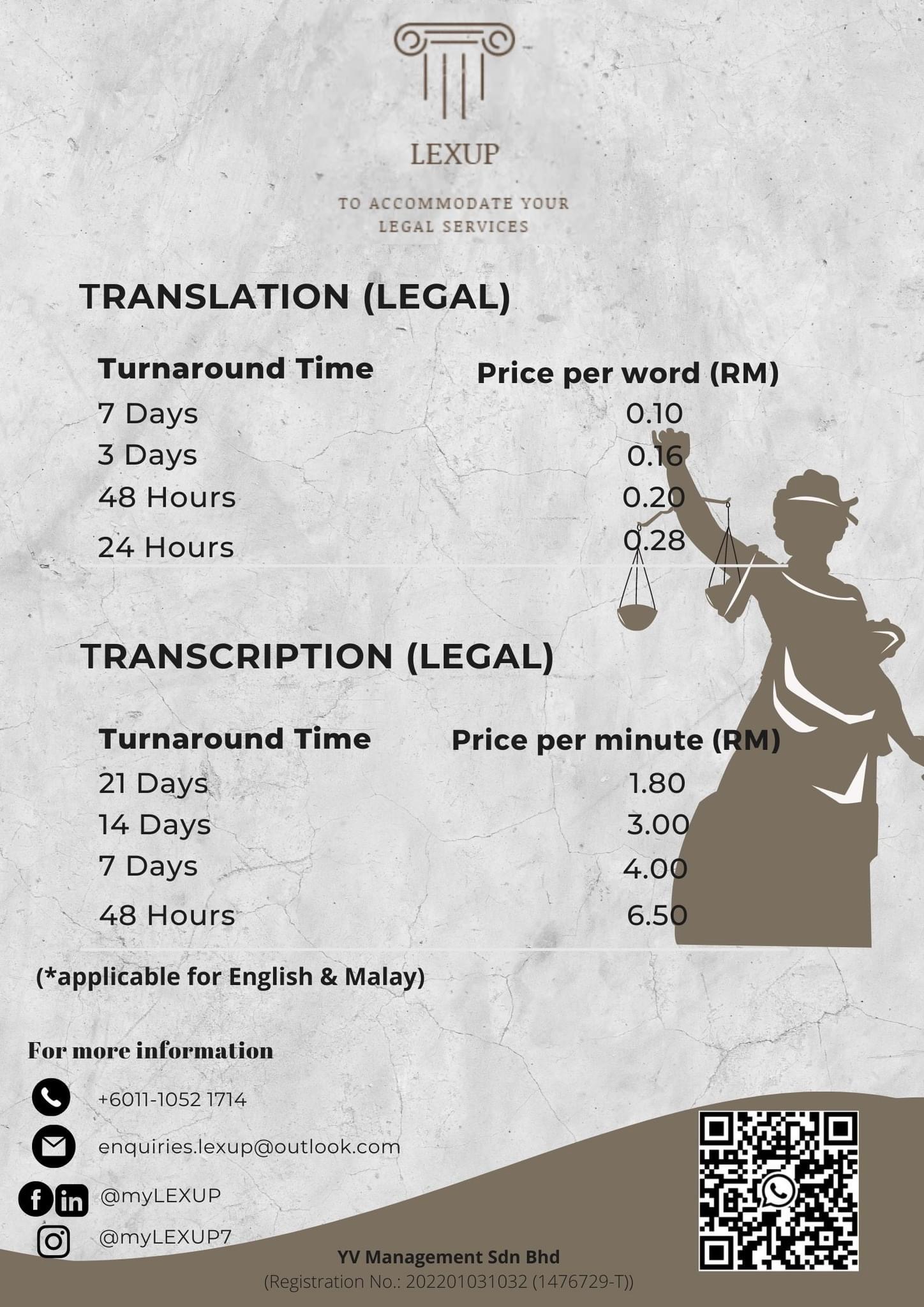
Not exactly sure where I came across this pricing menu by a translation service provider in Malaysia – Lexup – so apologies if I am not giving you the credit you deserve because this really grabbed my attention.
A translation service focussed on the legal profession that not only charges by the minute (let alone 6 minute units), but whose rates vary depending on how urgent your need is.
Alternatively, if you’re not happy with the hourly billing model, then let’s go old school (Charles Dickens era) and pay by the word. Again though, the quicker you want your work back, the more it will cost you!
Peak-load pricing. I have no idea why law firms have not adopted this years ago!
As usual comments are my own – but I’m sure there is someone out there who can tell me the optimum price to time!
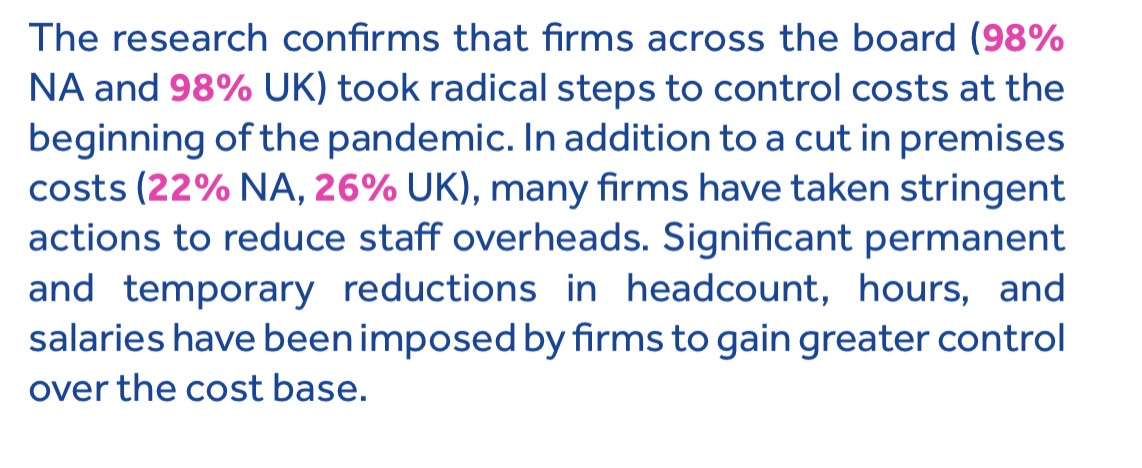
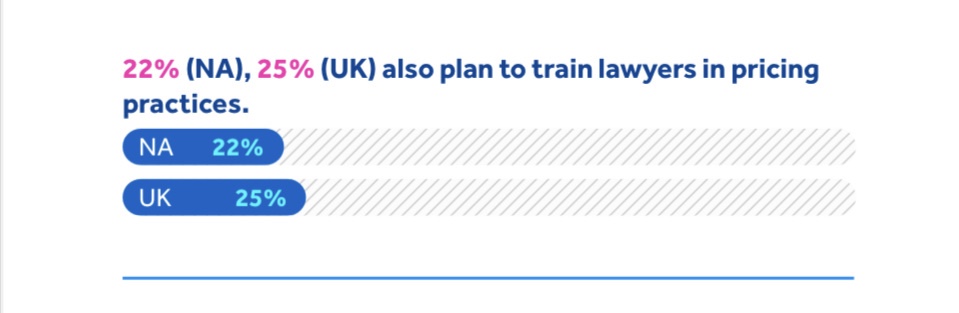
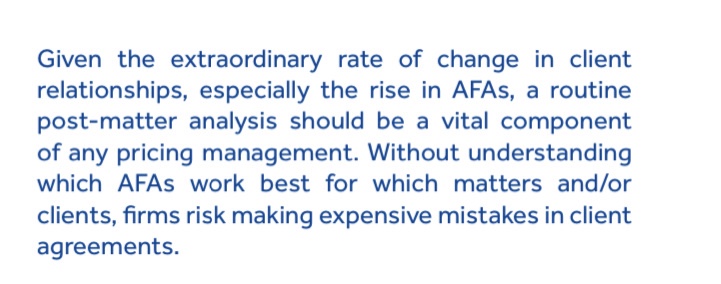
I’m a cynic, so usually read industry reports published by industry providers with a huge pinch of salt, but every now and then you get an exception to the rule. So is the case with BigHand’s recently published ‘The Legal Pricing & Budgeting Report’, which is full of really insightful information (so read it!).
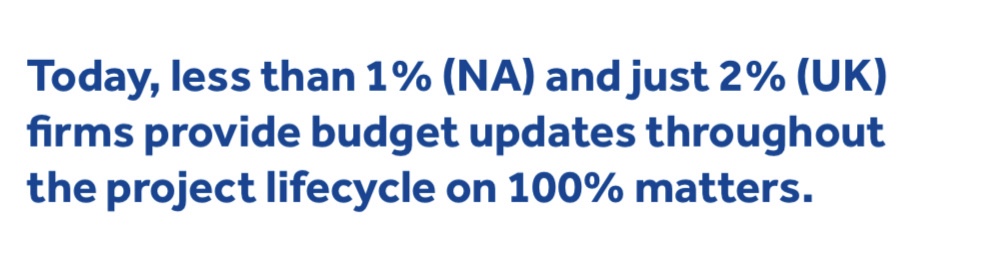
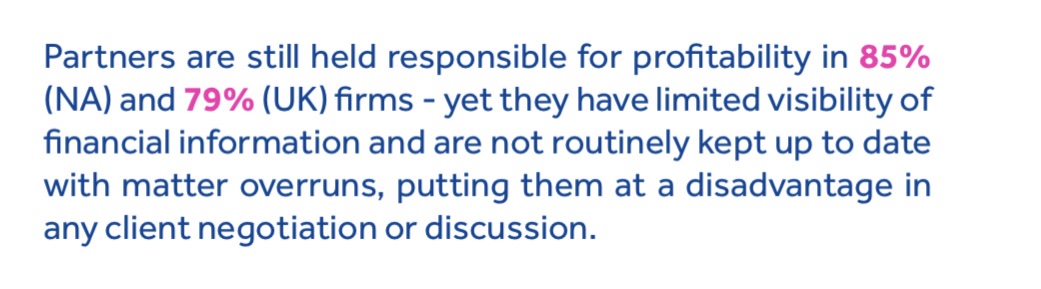
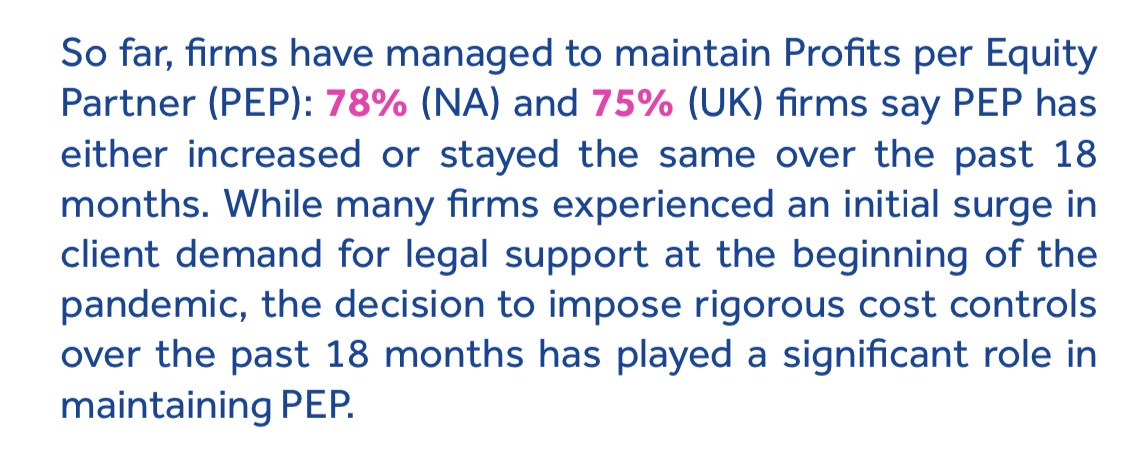
Here are my 10 take-outs (NA = North America and UK = UK):-
From
The damning:
1.
To the surprising:
2.
3.
To some obvious:
4.
5.
And some knowns:
6.
7.
With a few, “What the?” (as in, only…)
8.
9.
With a great conclusion:
10.
As I said, as a rule I don’t recommended reading these types of reports as they typically are a waste of time; but this is one I have no problem saying “go read it!” – and if you have any thoughts/comments, post them in the comments section below!
‘What would be some of the things I would want to be looking out for in a law firm’s invoice?
So here’s a quick list of my 10 things, but feel free to add your own 🤪 :-
Being charged [for]:
Expenses/disbursement – especially if they are unaccounted for (and particularly on fixed fee matters)
Travel time – especially if your lawyer is in the same town/city as you
‘Reading in’ time – especially when a new lawyer joins the team because one of the original team members has resigned or left the team
Team meetings to discuss your case/matter
Multiple lawyers attending the same meeting – especially if they have different time eateries
‘Out of scope’ work without a corresponding change order
Block billing of numerous tasks without explanation
Promotions – charge-out rates being increased for lawyers on your case because they have gain an additional year of post-qualified experience without adding any additional value
‘Bill padding’/‘Rounding up’ – when your lawyer rounds their time up to the next billable unit
‘Stickiness’ – where senior lawyers are doing work on your file that could be easily have been done by more junior lawyers, but they do it because they need to meet their internal billable targets.have different time.
As I say, feel free to add some of your own in the comments.
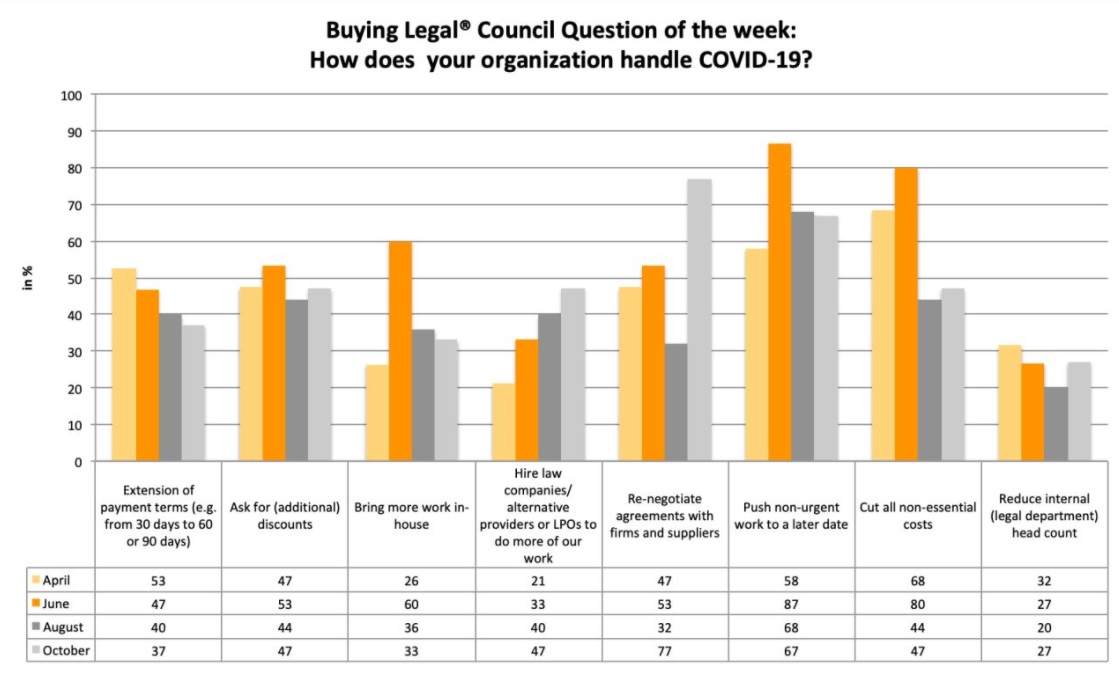
Tracking the responses to this question over a six month period (see graph above) has been interesting.
Extending payment terms; which I thought would have ballooned, has actually contracted.
Ask for (additional) discounts; which I would have thought would be leading the pack, has actually held relatively steady.
Bring more work in-house (outside of a blip in June) has held relatively steady. But more on this one in a second.
Hire alternative legal providers has actually ballooned, and may go some way to explaining why may believe the alternative legal services providers have been the real winners from COVID-19 – there time has come.
Renegotiating terms with law firms – more on this one below.
Pushing non-urgent work to a later date. No surprises with this one, makes perfect sense.
Cut non-essential costs: this one has shrunk relatively significantly since April. Not sure if that tells us there isn’t much ‘fat’ in in-house teams?
Reduce internal head count; is on the increase again and would seem to suggest a conflict with the “bring more work in-house” response above. Alternatively, in-house teams are really busy at the moment, which coupled with the rise in the use of alternative legal providers could well be very true.
Anyhow, the purpose of this post was to remake on the significant rise in clients ‘renegotiating terms with law firms’.
While this BLC reports (from what I could find) doesn’t define how this renegotiation process is happening, my experience has been that since May of 2020 there has been a significant increase in pitch and tender activity. Many clients are looking for significant savings and are looking to lock law firms into those savings for lengthy periods of time.
And I would have to say that I expect this trend to grow, so if you are a private practice lawyer who hasn’t yet locked-in expert pursuit/pitch/pricing expertise, you’re probably in for a rough 2021.
In any event, keep an eye on BLC – seeing where this trend tack us will be interested in the coming months.
As always, the above represent my own thoughts only and would love to hear yours.
In short, as McNutt’s title suggests, Uber have introduced an ‘Upfront’ fixed fee pricing model option for its UK customers.
Wonderful news, and encouragingly McNutt writes:
“…with the introduction of upfront pricing, both the rider and the driver will know the exact cost of their trip before they confirm”.
As someone who enjoys knowing what I’m paying for upfront, this is nothing short of brilliant news (even though I don’t live in the UK nor use Uber 🙂 ).
But…
there’s only one small problem…
which is,
more often than not the rider actually doesn’t know upfront what they are paying for.
Why do I say that?
Well, because Uber UK’s ‘Upfront pricing’ offer comes with four [very small but somewhat important] scenarios under which the agreed Upfront price may change.
McNutt’s article sets these out as being:
If the rider adds or removes a stop in their journey;
If the final destination is more than one mile away from the originally requested destination;
If a detour is taken and the trip is further (40% and 0.5 miles further) and slower (20% and two minutes slower) than originally estimated; or
If the trip is at least 40% and 10 minutes slower in duration.
Let’s take a closer look at these:
If the rider adds or removes a stop in their journey – okay, on first read this one seems fair. But then I re-read this and saw ‘removes a stop‘; and asked myself: ‘How does removing a step make my fare more expensive (unless the change element here is to reduce the fare – which would be fair go!)?’
If the final destination is more than one mile away from the originally requested destination-again, seems fair. But it doesn’t say if this final destination is the ‘original’ final destination. If that is the case, why am I paying more for your miscalculation (see below)?
If a detour is taken and the trip is further (40% and 0.5 miles further) and slower (20% and two minutes slower) than originally estimated-not sure what a ‘detour’ is, but having been in the UK just before COVID I can tell you we did a lot of detours!
And so we come to bullet-point #4 – If the trip is at least 40% and 10 minutes slower in duration.
Here I have LOADS of issues.
As McNutt writes:
In other words, if you hit traffic and your trip has been extended by a significant amount of time, the fixed cost will likely increase.
Now that sounds a little wrong. A fixed cost that is allowed to increase because of a time-based element.
Taking a step back here, McNutt writes that:
Uber says that it bases the fixed price based on the best-available route between the rider’s pickup and dropoff points. It uses the expected duration and distance of the trip to come up with the exact figure, while taking into account anticipated traffic patterns and known road closures. Costs for tolls and additional surcharges will also be accounted for in the upfront pricing figure. When demand is high, Uber says it’ll account for that with “dynamic pricing” — a new take on surge pricing.
So Uber totally scopes the project, with information the rider likely doesn’t have access to (Google is good, but that good?), but then says: ‘If we got our calculation wrong, we get the right to readjust’.
To my mind this is essentially a ‘get of prison free’ card for Uber, which is fine – but let’s not then say this is Upfront fixed fee pricing, let’s call it out for what it actually is: a cost estimate at best.
And so why this post after so long away?
Well, no prizes for guessing what other (hint ‘professional services’) industry might have this type of fixed fee pricing mentality!!
As always, the above represent my own thoughts only and would love to hear yours.












 RWS_01's B[D]log