General business development issues

Why asking someone to work 2,000 billable hours a year will kill their spirit

Business Development image

According to a post by Casey Sullivan of Bloomberg, earlier this week US law firm Crowell & Moring announced that it would increase its billable hour requirement for associates, from 1,900 hours per year to 2,000 per year. This new target will take effect 1 September 2016, but on the plus side 50 pro bono hours will count as billable.

15 Years ago I would have cried out “all kudos to you”. Back then my yearly billable target for an English ‘Magic Circle’ firm was 1,400 hours and I flogged my guts out to achieve that. So if you can effectively put 50% of billables on top of what I was doing (and trust me when I say I wasn’t going home at least one day a week), then you’re a better person than I (or so I would have said then).

But if you really need validation of what asking someone to work 2,000 billable hours a year means, then I would like to recommend you read “The Truth about the Billable Hour” by no less an institution than Yale University. In that publication, Yale caution aspiring lawyers that if you are being asked to “bill” 2201 hour, you need to be “at work” (includes travel time and lunch, etc.) 3058.

Taking that further, from an Australian law perspective, if you are being asked to bill 2,000 hours a year then you need to bill 8.3 hours a day (assuming a 48 week year and you never get sick; which, if you are being asked to do this, you most likely will be). That means you are very likely going to need to be “in the office” around 12 hours a day – and that assumes no write-off by your partner or leakage.

But here’s the question: “What difference does this make?

I ask this because I wholly agree with the following comment my friend Kirsten Hodgson made when I posted a link to this article on LinkedIn:

“why would you reward the number of hours someone spends working? Surely it would be better to focus on how to deliver value smarter and more quickly. This doesn’t incentivize innovation or any type of process improvement.”

Exactly right, you’re measuring all the wrong things!

Leaving aside the Balance Scorecard argument, asking someone to do 2,000 billable hours a year doesn’t take into account:

  • client satisfaction
  • realisation (it’s a utilisation metric)
  • working smarter
  • innovation

or many other metrics.

And for those who may point out the benefits of this including 50 hours pro bono I say this: the Australian Pro Bono Centre National Pro Bono ‘Aspirational Target’ (ie, where we would like to get to), is 35 hours per lawyer per year.

But probably more importantly than all of this is this:

–  if you ask someone to do this, then you really leave them very little time to do anything else.

This really should be a concern, on the business front because you leave almost no time whatsoever to train them in the business of law – ie, you kill any entrepreneurial spirit they may have. And, crucially, the only metric that really counts to them is that all important 2,000 billable hours (keep in mind that like I was, they’re very young). Which for a profession that has the mental health issues we do, is not good.

For all of these reasons, I’m hoping no other law firm follows this. But sadly I think they will.

Oh, and if you are a law firm client reading this post you might just want to look up whether your local jurisdiction has a “Lemon Law” rule that applies to provision of a service.
RWS_01

Survey: The role pricing specialists play [or don’t] in RFP responses

Last week the USA’s J Johnson Executive Search, Inc and the UK’s Totum published their combined ‘RFP Survey Responses: U.S. and U.K. Data 2016‘.

A fairly evenly distributed demographic of large (defined as being 600+ lawyers), mid-sized (defined as being 100-600 lawyers) and small (up to 100 lawyers, for the U.S. only) law firm respondents, insights from the survey include time spent responding to RFPs, persons within firms charged with project managing responses, as well as tools and expertise made available to responding teams, in both the U.S. and the U.K.

As with most surveys of this nature however, it is the role that pricing plays that typically grabs my attention and given this survey’s combined U.S. and U.K. perspective even more so in this case.

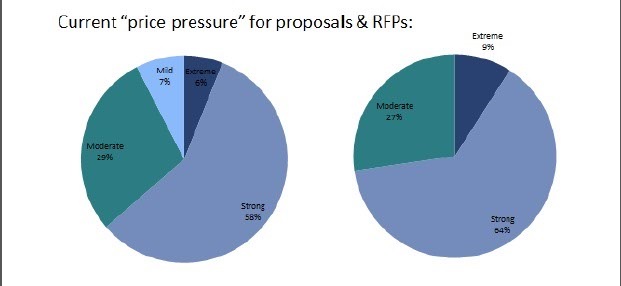
Given ongoing market pressures, it should surprise no one that responses of “strong” from the U.S. (58%) and the U.K. (64%) to the question of what current “price pressure” for proposal & RFPs were fairly similar.

rws-5


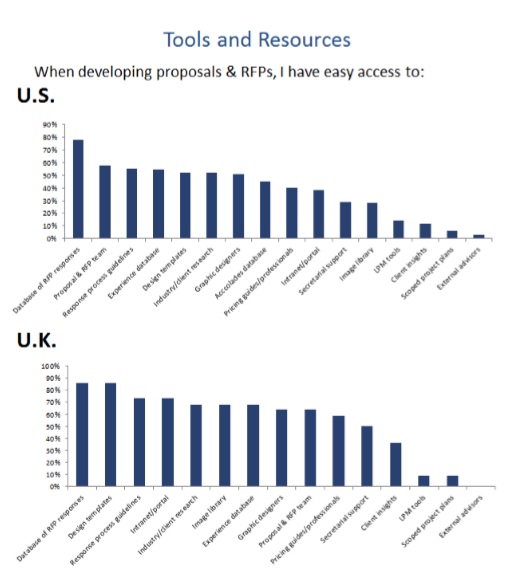
A little more surprising to me was the difference in responses between the U.S. (40%) and the U.K. (60%) to the question “when developing proposals and RFPs, I have easy access to” the answer was “pricing guides/professionals“.


rws-7


Now don’t get me wrong, even these days I think it is particularly progressive and somewhat comforting to know that 60% of my colleagues in the U.K. have access to some sort of “pricing guide/professional”.

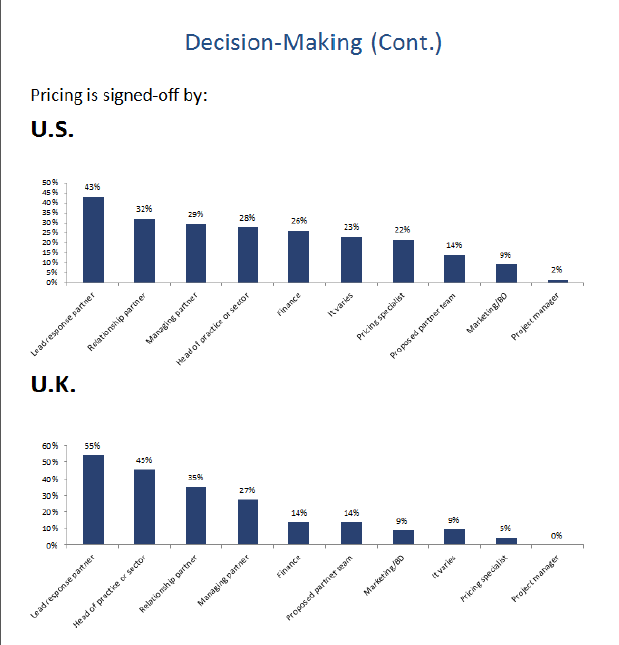
Until, that is, you get to see who actually gets to sign-off (i.e., the “decision maker”) on the all important issue of pricing in RFPs in the U.K.. Here, and I kid you not, the response in the U.K. of “pricing specialist” (that same person who 60% claim to have some form of access to – either via guides or in person) was 5%.

I think that is worth repeating – 5%.

Put into context, that means in the U.K. pricing in your RFP is more likely to be signed off by Marketing & BD (9%) or Finance (14%). Indeed, in the U.K., “It varies” is likely to have more of a say on final pricing in the RFP response than the so-called pricing specialist.

rws-4

I’m not so sure why the results of this particular survey so surprise me. After all, time and time again survey results show that we typically say one thing about pricing, but do quite another.

What I will say though is this: if you have access to a pricing specialist, and pricing by your pricing specialist is being determined in 5% or less of your RFP responses, my guess is going to be one of two things: (a) you have no idea if you are making money from your RFP “wins”, or (b) more likely, you are leaving money on the table big time!

RWS_01

* images should be enlargeable, apologies if they appear a little blurred.

Independence Day & The Billable Hour

Two things got my attention on Friday. The first was the decision by the UK to exit the EU (so-called “independence Day” by some of the more fanciful politicians and “Brexit” to most of the rest of us). On a much smaller scale, the second was an article in The Australia Financial Review that “Ditching the billable hours case a struggle“. (print edition – NB: online the article title is “Billable hours to always hold a place in law firms“).

With the first of these two items, I have very little to no control over and am left at the mercy of others.

The second on the other hand is absolute rubbish!

To be clear, mention of the billable hour in the opening four (4) paragraphs of this article are all to internal metrics; specifically how many hours fee earners need to bill each day to make budget (and a side note here, anyone else note how this changed from an annual figure of 1,400 hours to a daily figure of between 6 and 7.5 hours depending on which firm you work for? Is this because a daily figure is much easier to live with than an annual figure that daunts you by its task? If so, kind of simplistic thinking towards people who are supposed to be in the top 1%).

Anyhow I digress as this has nothing to do whatsoever with how clients are charged, much less how they want to be charged, and whether or not the billable hour needs to remain the “go to” fee arrangement of choice by firms and paragraph five (5) of the article tackles this issue head on when it says:

“However, the majority of firms said they worked with clients and offered alternative fee arrangements if suitable.”

You’re kidding right?

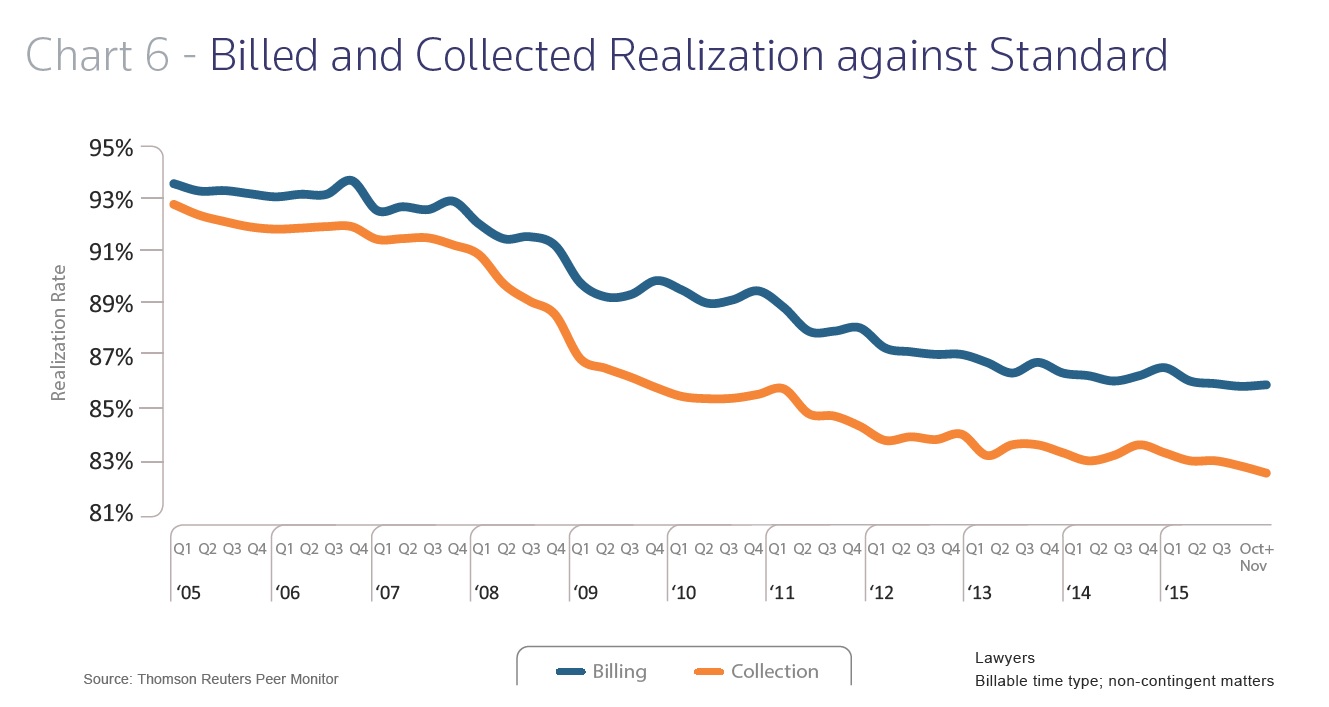
For those of you who have not seen it lately, here is the Thomson Reuters Peer Monitor ‘Chart of Billed and Collected Realization Against Standard‘ for the period 2005 to 2015:

realise

That squiggly little line in free-fall tells you realization rates have fallen from roughly 93 cents in the dollar in 2005 to just over 83 cents in the dollar in late 2015. It also tells me that you are not doing a very good job if you are working with your clients vis-a-vis how you charge them for the work you do and it puts to rest any attempt to suggest that billable hours are the preferred method of clients to be billed (unless, that is, you’re suggesting that clients know they can get discounts, or just not pay, bills that accrue on an hourly basis).

So over the weekend I got to think: like the article says, pretty much all of the reasons why the billable hour continues to be a struggle to ditch are down to internal measurement metrics. So, maybe, just maybe, like the UK did on Friday, it’s time for Australian law firms to opt out of the known and disruptive itself – and maybe the rest of the world with it!

RWS_01

Report: Collected realization plummeted to 82.2% in Q1 2016

Business Development image
Thanks to an article by Dave Galbenski of Lumen Legal – ‘Overcapacity, Underutilization and Realization Rates Plummeting‘ – I have just been made aware of the publication last month (May ’16) of the Q1 2016 Executive Report (.pdf download) undertaken by Peer Monitor Index (Report).

While the Report gives glimmers of hope (demand slightly up for certain practice areas), the overall message is bleak. And none so more than this:

“After showing some recent signs of stabilizing, collected realization took a sudden and sharp drop in the first quarter. For most of the past two years, collection rates have hovered around the 83% mark. But in Q1, collected realization plummeted to 82.2%. Not only is this a new historical low, it was the largest quarterly drop in more than three years.”

OK, two things here:

  1. a collected realization rate of 83% is not a benchmark we want to be heading to, but away from.
  2. if you keep putting your hourly rates up (recently BTI Consulting’s The Mad Clientist asked: ‘Is $5,000 an Hour Next?‘) but your collected realization rate is “plummeting”, then you’re most likely losing money (as well as the respect of your clients I might add).

My only other thoughts are:

  1. why do we insist on the hourly rate model as our primary means of charging if our collected realization amounts to 82 cents in the dollar? Seems absolute madness to me; and
  2. how many law firms out there can continue to operate on such an “historic” low collected realization rate? I know a number of accountants and bankruptcy lawyers who’ll happily tell you: “not many”.

RWS_01

AFAs accounted for less than 10% of all matters in the US last year

This month saw publication of the End-of-Year 2015 edition of the Enterprise Legal Management Trends Report by LexisNexis and CounselLink.

Based on data derived from outside counsel invoices – accounting for US$21 billion in legal spend in the USA – processed through the CounselLink platform, to my mind what makes this Report different to others is this: it provides insights others might miss because while talk can be cheap, the numbers rarely lie.

i2

[click on image to enlarge]

From an Australian perspective, a couple of surprising statistics come out of this year’s Report.

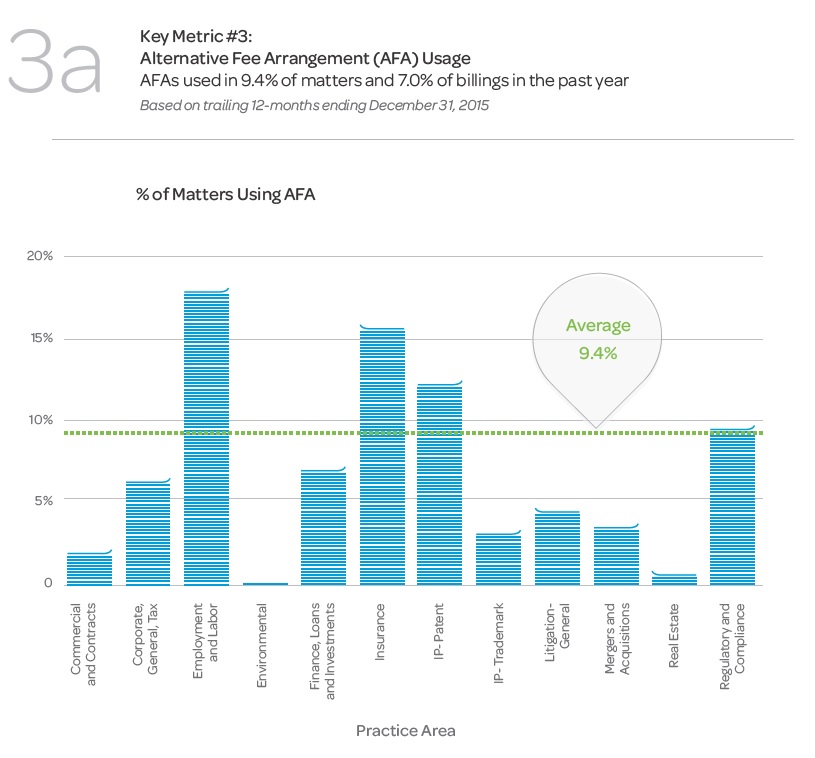
  • the use of AFAs, to govern the service payment of matters, only accounted for 9.4% of matters processed through the CounselLink platform. Given all the chatter and whining you hear from law firms, I would have expected this rate to be much, much higher.
  • Employment and Labor (at 17.3%) is a fairly significant practice area leader in the number of matters (but not revenue – see below) using AFAs, but Real Estate accounting for something less than 2% of its practice area matters using AFAs seems out of whack.
  • Nearly 10% of Regulatory and Compliance matters are done under AFA arrangements. At first this seemed a little strange (given the grey hair nature of the advice being sought), but then I thought a large number of compliance programs could be sold using retainers, fixed fees and other AFAs.

i3

[click on image to enlarge]

Moving on to percentage of “billings” executed under AFAs and things start to get really interesting.

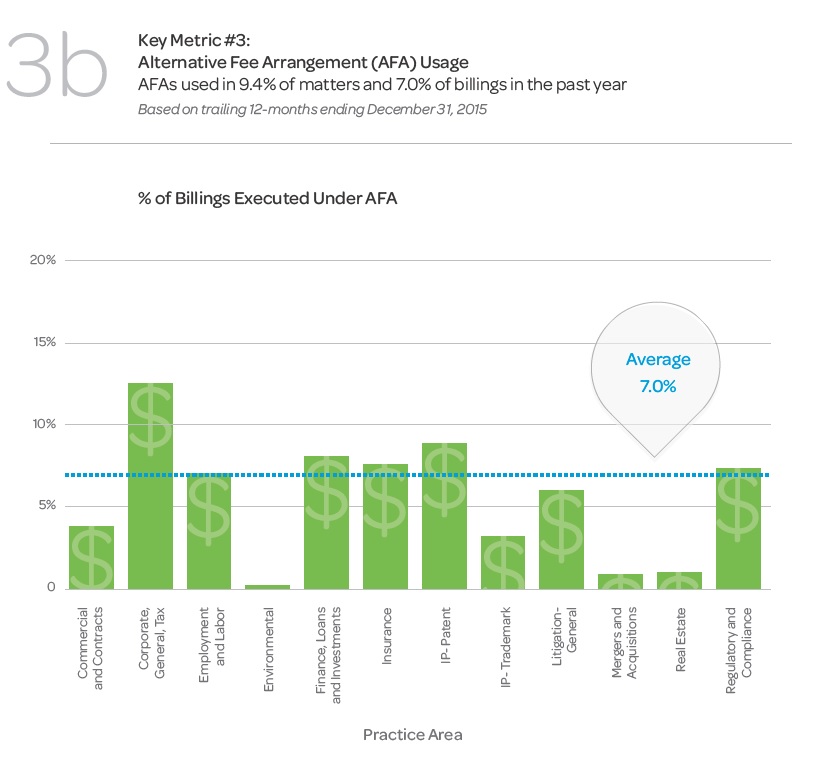
  • at 12.4%, by far the biggest practice area using AFAs by billings is Corporate, General and Tax (excluding Mergers and Acquisitions, which is a separate line entry). Not sure I would have guessed that.
  • Finance, Loans and Investments ranked third highest practice area using AFAs by billings last year. Again, don’t think I would have picked that.
  • by billings, only 7% of Employment and Labor practice area matters are executed under AFAs. So, 17.3% of Employment and Labor matters were conducted under AFAs, but only 7% of billings. Might just be me, but that seems strange and I’d want to dig deeper into why that might be the case if my practice was showing these numbers. Then again, may just be the Pareto Theory in practice!
  • At roughly 2% of practice area billings, who says Real Estate has become a commoditized practice area? Because these numbers aren’t showing it.

Interesting numbers showing through this Report. Lots of chatter around the rise in M&A activity/revenue and the fact that “New Law” isn’t being hired to do big ticket work, but the use of AFAs and rationalization of legal panels (which I may well blog on later this week) were my two big takeouts.

RWS_01

Altman Weil Flash Survey: Has the era of data driven pricing arrived?

Last week saw the publication of Altman Weil’s 2016 Law Firms in Transition Survey. Now in its eighth year, this survey continues to be a good indicator of the market forces law firms are facing and in recent years it has been a good indicator of the fee pressure clients are putting on firms.

So, how have firms been tracking when it comes to pricing pressure issues?

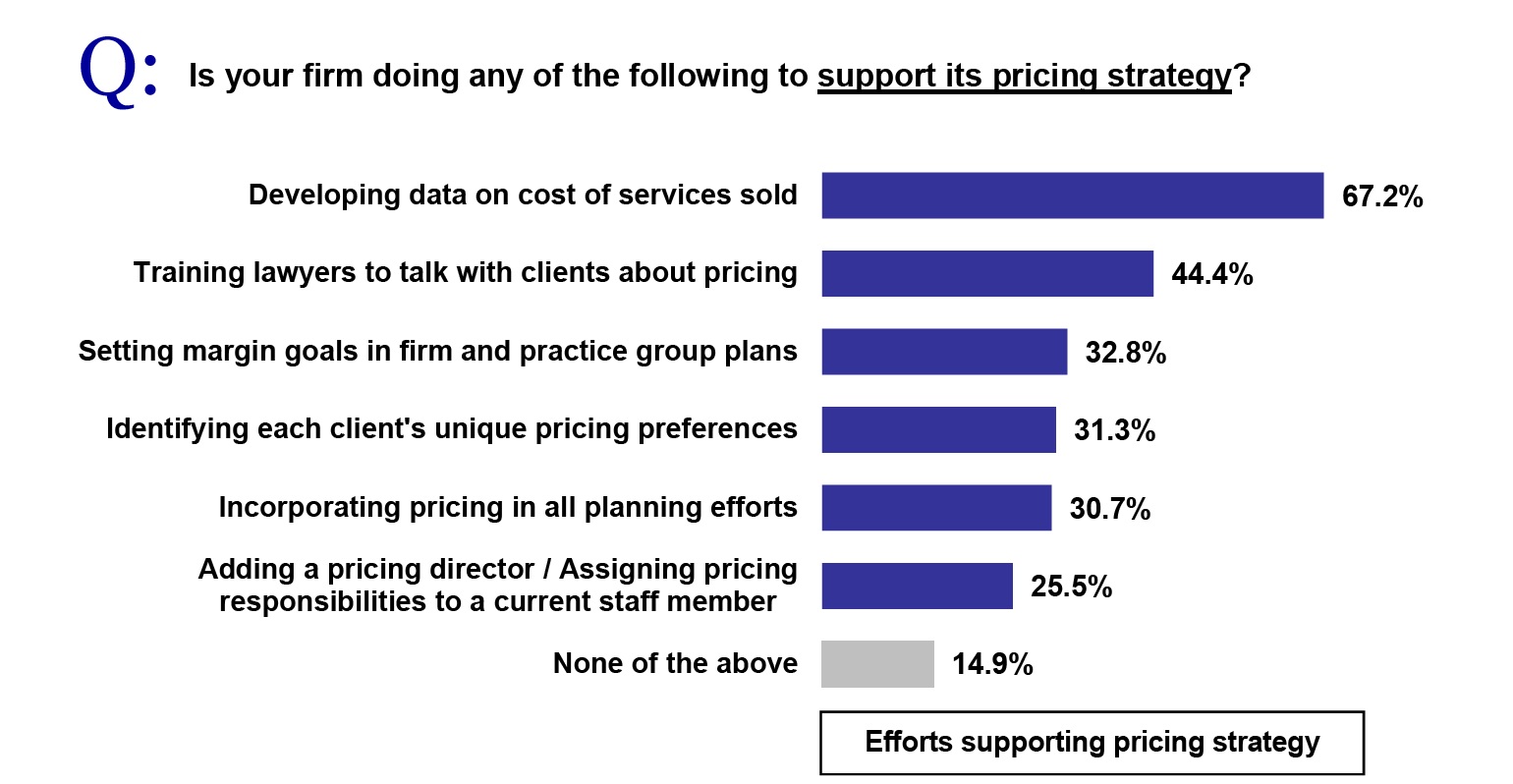
At first blush – well. When asked: “Is your firm doing any of the following to support its pricing strategy?“, “Developing data on cost of service sold” and “Training lawyers to talk with clients about pricing” rank head and shoulders (in first and second spot) above everything else.

AM 1

[click on image to enlarge]

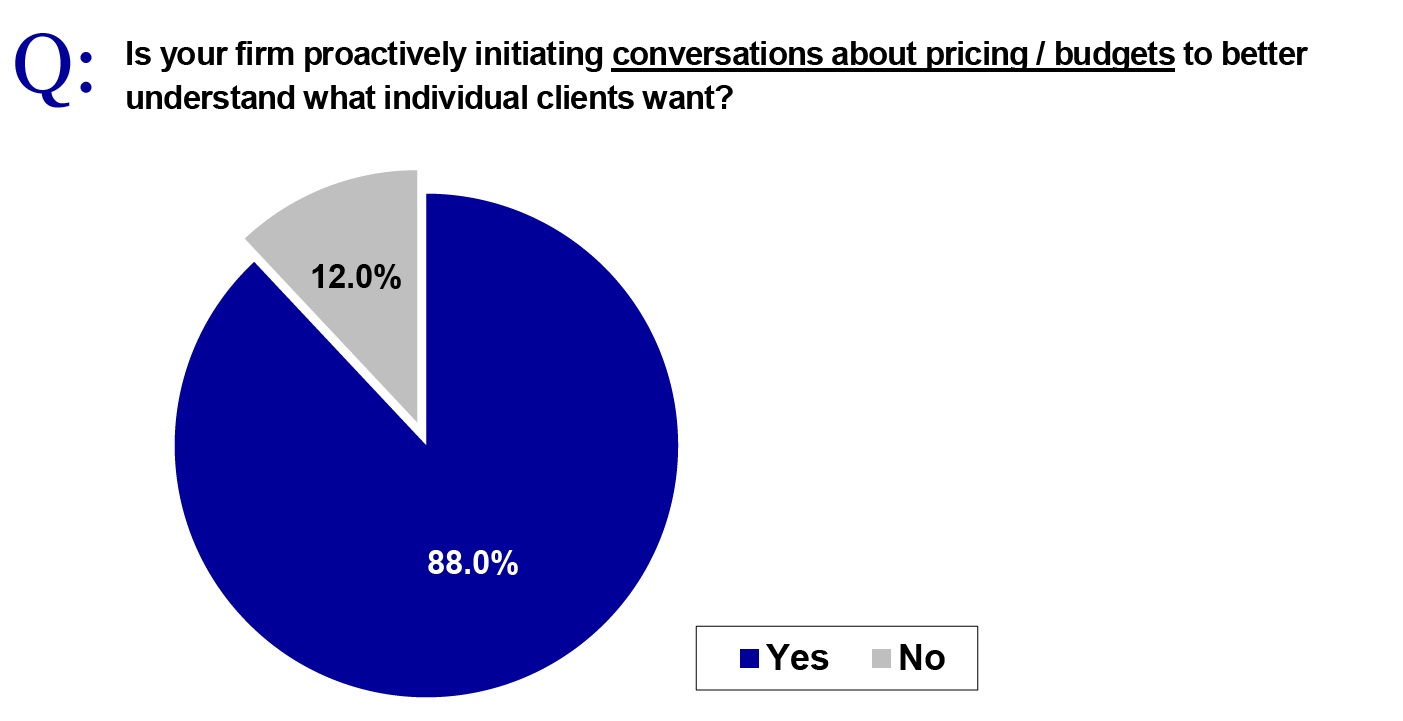
Clearly moving in the right direction then, reinforced by the overwhelmingly positive response to: “Is your firm proactively initiating conversations about pricing / budgets to better understand what individual clients want?

AM 2


[click on image to enlarge]

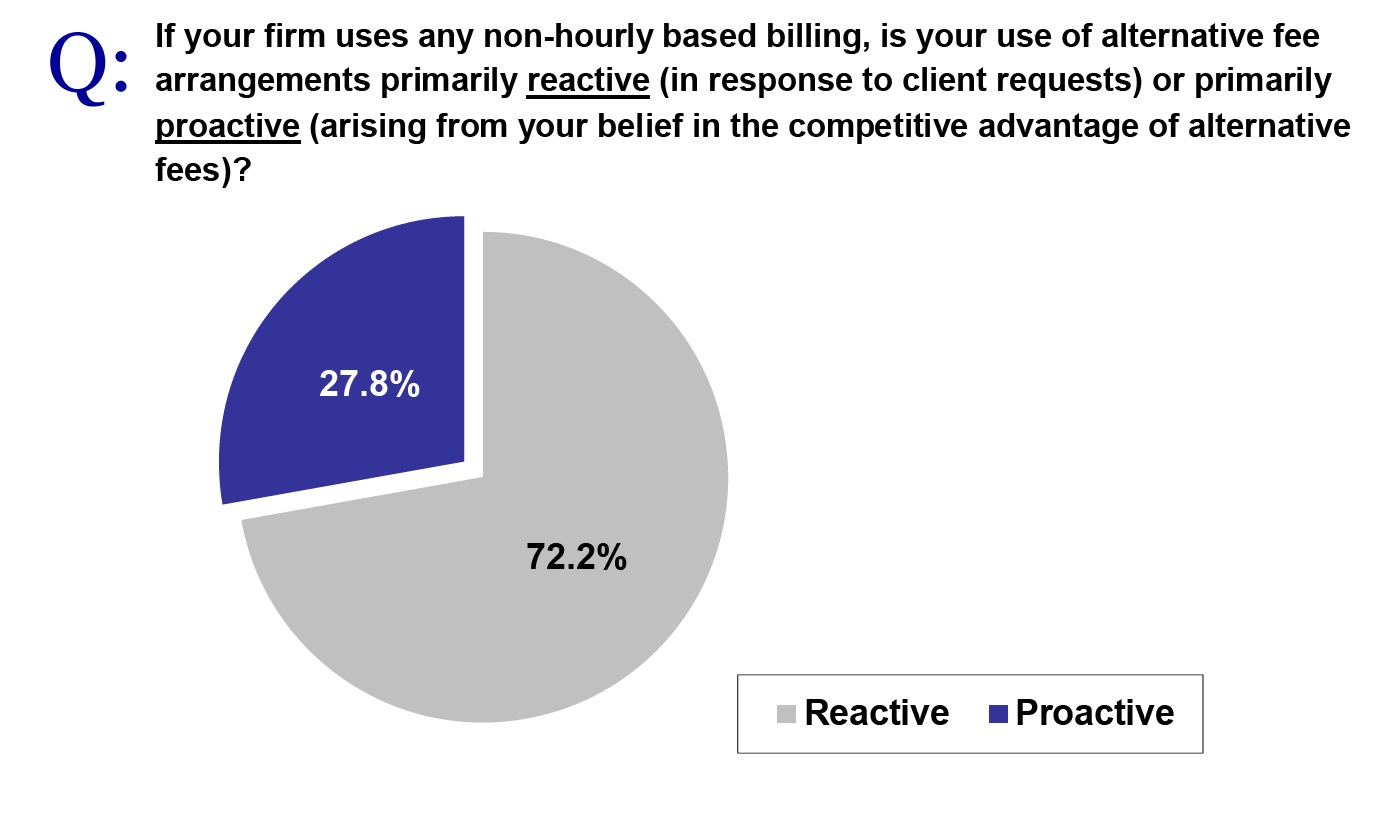
until we get to this shocker…

AM 3


[click on image to enlarge]

So, almost half (44%) of law firms are now training lawyers to have the pricing conversation with their clients, a whopping 88% of firms are proactively initiating that conversation – and yet three-quarters (72.2%) of firms only make use of non-hourly based billing methods in response to a client request.

Am I the only one who finds that incredible?

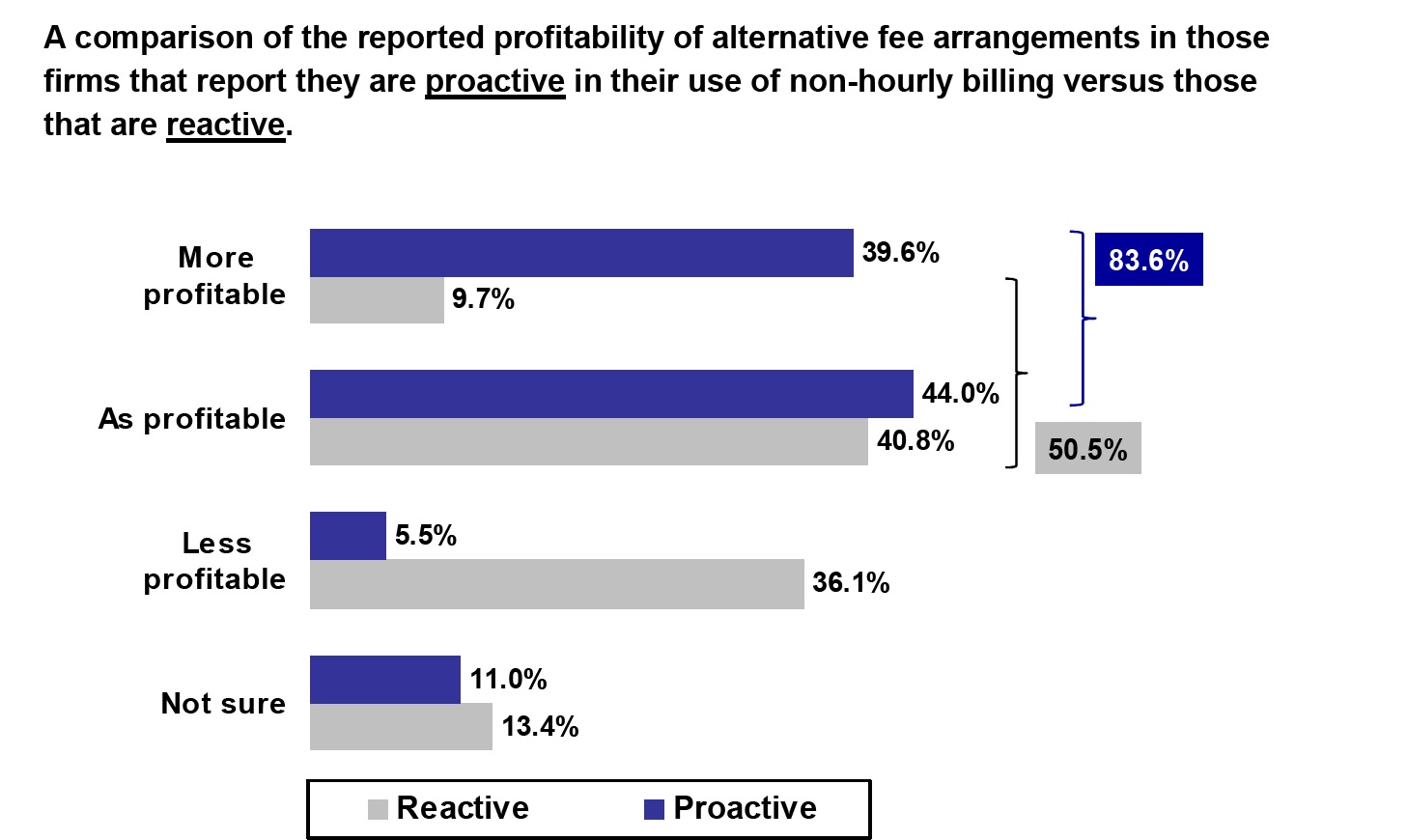
But really, why does it even matter?

Well, here’s your answer:

AM 4


[click on image to enlarge]

There’s a clear lesson here for anyone that’s willing to listen to it: if you want your firm to be more profitable, be on the front foot when it comes to opportunities to provide alternative fee arrangements.

If you haven’t already, I’d like to recommend you download and read the full survey, if for no other reason than it contains this gem…:


AM 5

[click on image to enlarge]

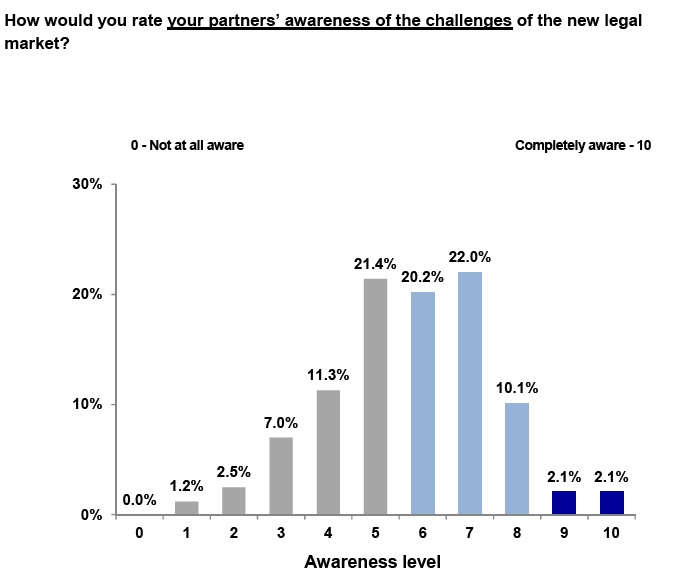
Which, if you believe, suggests that around half of all law firm partners are not even aware of the challenges their firms face!

RWS_01

What do clients value most when dealing with their lawyers?

Last week I posted on the recent publication of the 2016 LexisNexis Bellwether Report (this year titled ‘The Riddle of Perception’) – with specific reference to the disconnect within the Report between opportunities lawyers identify and approaches they plan to take.

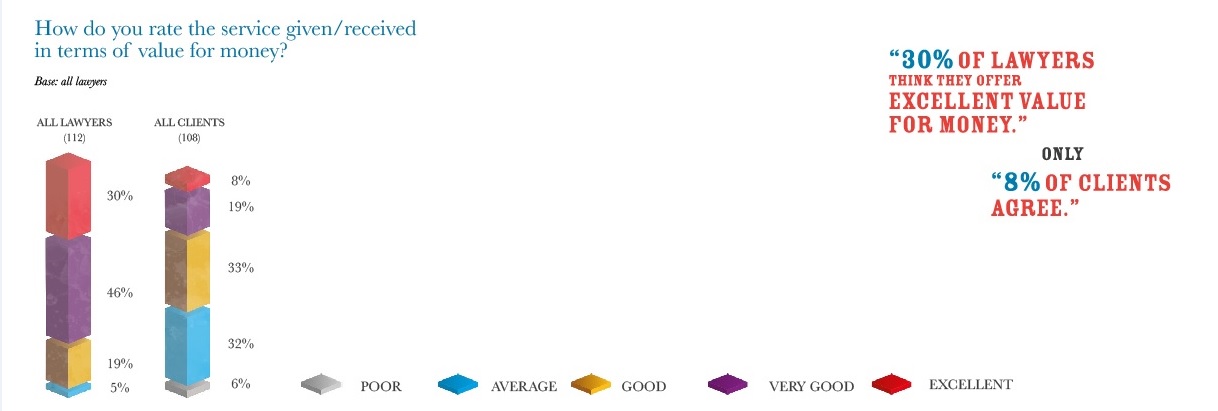
Looking at the Report further, when asked: “How do you rate the service given/received in terms of value for money?” – 30 % of lawyers thought they offered “excellent” value for money, whereas only 8% of clients agreed.

Probably more worryingly, 46% (almost half!) of law firms believed they provided a “very good” service, and only 19% of clients agreed.

And of extreme concern to law firms? – 32% (or almost a third!) of clients thought the service provide by law firms was “average“, whereas [not too surprisingly] only 5% of law firms agreed.


Image a

[click on image to enlarge]

Clearly a disparity remains between the service that lawyers believe they are providing and those that clients feel they are receiving.

And herein lies the problem: as we all know, “value” is subjective, in the eye of the recipient. In other words, it really doesn’t matter what “value” law firms believe they are delivering, but what the client believes they are receiving trumps all.

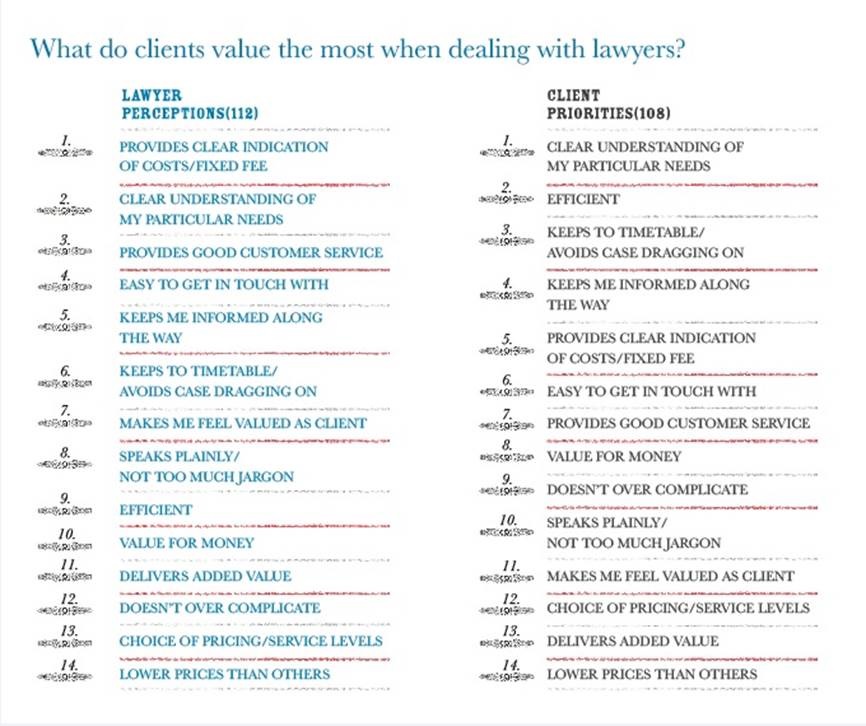
So, “What do clients value most when dealing with lawyers?“:-

image b

[click on image to enlarge]

Well, fortunately that question is answered in the Report too.

Takeout from this?

Just because a lawyer agrees to provide a discount doesn’t mean they’re providing greater value!

RWS_01

Exiting the ‘Valley of Despair’: Tips on rebuilding a book of business

Valley of despair

source: Emily Carr:- ‘Practical Change Management for IT Projects

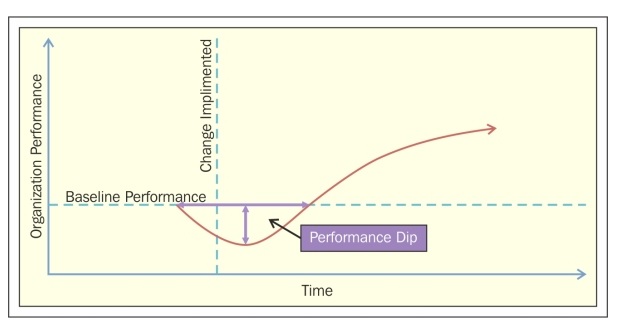
The ‘Valley of Despair‘ is a term used in IT process improvement projects to describe the period of time where productivity decreases immediately after the implementation of a new process. In essence it describes that period of time during which you shift away from what you know and are comfortable with to what is new and unknown (but which will ultimately, hopefully, results in better processes).

Although a term commonly associated with process improvement, to me this has also become a good way to best describe a growing trend in the modern lawyer’s life; namely that particularly difficult period during which a disruptive element impacts on their book of business. Examples would include:

  • economic: with the GFC most securitization lawyers lost their practices overnight.
  • panel: when your firm loses a panel appointment with your practice’s biggest client as a result of the client rationalizing the number of its panel firms.
  • relationship: the key contact at your biggest client moves to a company your firm has no relationship with; or, worse, is promoted to a role where they no longer have influence over who gets the legal instructions.

There are many others, but you get the gist: your performance hits a wall called ‘change‘.

In my experience, partners who face this scenario come face-to-face with Elizabeth Kuber-Ross’ “Five Stages of Grief“:-

Denial —> Anger —> Bargaining —> Depression —> Acceptance

To overcome the Valley of Despair you need a sixth element: a desire to move forward.

  • Step 1: Accept your fate

The first step in any recovery program is accepting you have an issue. Too often law firm partners stick their heads in the sand and refuse to accept that anything is wrong until the Managing Partner is knocking on their door asking them what their plans are for the future (wink, wink: it’s not with us!). By then, you are well and truly in to the ‘bargaining’ and ‘depression’ phases. If you want to rebuild your book of business you need to be much further ahead of the game than that.

  • Step 2: Do an audit

Here’s the thing: things in life are rarely as bad as they first seem. So, as soon as you become aware of a change agent – such as those above – get out your pen and a piece of paper and write down a list of who you know, when was the last time you contacted them, what type of work could you be doing for them, are you already doing that type of work, etc.

In short, take stock of what you have and who you could be doing it for.

  • Step 3: Make a plan

Alan Lakein is reported to have said: “Failing to plan is planning to fail“. I’m not sure if he actually did, but it’s pretty accurate and if you want to rejuvenate your book of business then you will need a plan of how to go about this.

This plan should include the obvious, like:

  1. what type of work do I want to be doing?
  2. who do I want to do this work for?
  3. what do I know [commercially] about these businesses [tip: if the answer is “not a lot”, get a research assistant on to it ASAP]?
  4. who are the decision makers at these companies?
  5. how likely are they to give you / your firm the work [tip: rank the likelihood from 1 – 5 (very – unlikely)]?

Your plan also needs to include things you may not think of, such as:

  1. will my partners give me relief while I try and rebuild my book of business? If so, how long?
  2. what level of fees do I need to generate (cost +, times 3, times 5)?
  3. what rates will I need to charge to generate that level of fees? will the target client accept these rates? if I need to discount, will my partners accept me discounting to win work when their clients are paying full freight?
  4. who is currently doing the work for the target and what am I bringing to the table that would make the target move the work to me?
  5. how will my competition react to me invading their turf?
  • Step 4: Execute on the plan

I’ve heard it said that: “a plan without an action is a wish“. In the world of professional services, we see a lot of wishing!

So, as soon as you have your plan in place you need to get out from behind your desk and start to execute on it. Look at what

  • inbound and outbound related activities you need to do;
  • networking events are taking place and when;

then set yourself a 30-60-90 day action plan to work towards.

Most importantly, always be responsive and never, ever quit.  Building a book of business takes patience and repetition, you cannot adopt a “lottery mentality” as one shot actions nearly always lead to failure.

So if at first you don’t succeed, try again. That way, you’ll give yourself the very best chance of rebuilding your book of business and moving forward.

RWS_01

“Bill clients, get money”

Business Development image

In my spare time, I’m a keen amateur photographer (note, I didn’t say “good” 🙂 ). Anyhow, because of this interest I follow a number of photography related blogs which, every now and then, include posts that crossover into my professional life.

A post I read this morning from the DIYphotography website (I say “from” because I use feedly as my rss feeder and read all my morning updates on the Ziner app) is just such a post. Titled, ‘3 Vital Tips To Help You Set Your Photography Pricing‘ by Gannon Burgett, the post takes up a call by Sue Bryce that:

“You can’t price yourself when you have no self worth.”

and goes onto suggest that photographers follow the approach of photographers Sue Bryce and Tiffany Angeles and, I quote,:

  1. Charge what you’re worth – be confident in your abilities and know what it is you offer, both in terms of products and aesthetics
  2. Never set yourself at market value – part of knowing what it is you offer helps you better understand what it is you can charge. Don’t base your price purely off of competition. Don’t be afraid to charge more.
  3. Value yourself and your work – this is more all-encompassing than a specific tip, but without the confidence and self-value, it’s going to be a much tougher job to set your pricing.

Amazingly simple and straightforward advice that many lawyers could benefit from – a fact brought home to me in the very next post in my Ziner app, ‘The deep discount attorney and other cautionary tales‘ by Carala Del Bove on the LexisNexis Business of Law blog.

In this post, Del Bove quotes from real life case studies Ms Ann Guinn cites of lawyers willing to offer discounts to clients because, to quote:

“it just felt greedy to me [not to].”

In the post Ms Guinn offers the following two pieces of advice I wanted to share:

“Don’t try to get into your clients’ heads, cautions Ms. Guinn. In other words, don’t let your clients determine the value of your work.”

rather, discuss this with them upfront when you are first asked to quote on the instruction; and

“Instead of worrying about what discounting legal fees will mean for your client, think about what it will mean to you as a small business owner.”

All in all, two excellent posts on understanding the value of the service you provide clients and the dangers you face if you don’t price, bill and collect revenue on your work appropriately.

RWS_01

ps – I’d also like to credit Ms Guinn with the title of this post.

Why 1.9% revenue growth is not going to be enough, and what you can do about it

Business Development image

A fair amount was made in response to last week’s news item in Lawyers Weekly that [legal] industry revenue would grow by 1.9 per cent a year between 2016 and 2021 (‘Revenue growth on the cards despite challenging conditions‘ by Stefanie Garber on 6 April) to reach a total of $24.8 billion  (the Lawyers Weekly article draws on, and quotes, information contained in the latest IBISWorld Industry Report: Legal Services in Australia – March 2016).

Leaving aside the IBIS quote in the Lawyers Weekly article that:

“Wages were also set to increase, from a total pool of $10.5 billion in 2015-2016 to $11.4 billion in 2020-2021.”

or a “dire lawyer pay increase of just 1%” as another industry publication put it, banking 1.9 per cent revenue growth year-on-year over the next 5 years will simply won’t be enough if you have any ambition of your law firm staying afloat.

Why do I say this? Simple, The Australian Bureau of Statistics (ABS) Consumer Price Index (CPI) rose 1.7 per cent through the year to December 2015. This was a slight upward movement from 1.5 per cent for the year through September 2015. And with record low interest rates in Australia, it is highly unlikely (although not impossible) this will go down.

That means, by banking just 1.9 per cent annual revenue growth through to 2021, at best your firm will be standing still and more likely it will be going backwards.

If we agree then that 1.9 per cent annual revenue growth through to 2021 is not going to cut it if you want your firm to stay in business, what measure can you adopt to buck this?

In ‘Grow from Your Strengths: The only sustainable way to capture new opportunities is to remain true to what your company does best‘ a post by Gerald Adolph + Kim David Greenwood published on 18 August 2015 in strategy + business, Adolph and Greenwood contend that there are essentially four (4) ways a business (in our case, a law firm) can grow, which are:

  1. In-market leverage‘: which is where you seek out new growth opportunities from your existing customer-base. For law firms this could either be (a) grow the amount of current work you do (i.e, doing loan work for ABC Bank?, well do more loan work ABC Bank); or (b) cross-sell services to your current client-base (i.e, currently doing patent protection work for Pharma A?, well do corporate M&A work for Pharma A too).
  2. Near-market expansion‘: this is where you pursue opportunities in unfamiliar sectors with a product that has been tried and tested in a core sector of your business (in technical speak, ‘expansion through adjacencies‘). In laymen’s terms, if you currently do compliance work for banking clients but have never done any compliance work for insurance clients, then examine how easy it might be to transfer that existing [compliance] skill to the new [insurance] sector.
  3. Disruptive growth‘: where you respond to the current tight market conditions with a dramatic change in strategy by offering entirely new service lines. To a degree we can see this in last week’s announcement by Minter Ellison that it was launching Flex – but Minters are by no means the first to do this, nor will they be the last!
  4. Capability development‘: get better at what you are currently doing!

I wanted to expand briefly on ‘capability development‘. In Adolph and Greenwood’s post this has a number of meanings but one of those is ‘operational improvements‘ (legal project management anyone?).

For law firms operational improvements can be achieved really, really easily:- get better at billing; and, specifically, collecting what you bill.

realise

This is a 10 year outlook on ‘Billed and Collected Realization against Standard’ taken from the most recent [2016] Report on the State of the Legal Market by Georgetown University Law Center and Thomson Reuters Peer Monitor. It shows fairly graphically the fall off in realized rates over the last decade. Now can you imagine what it would do to your firm’s revenue and bottom line profitability if you could get that figure back closer to the 93% of a decade ago by 2025? My guess would be, significant.

RWS_01

ps – if you would like to see a little more on this, you can purchase this video I did for CPD for Me a few years (2014) ago.