𝗛𝗼𝘄 𝗺𝘂𝗰𝗵 𝗶𝘀 𝗮 𝗵𝗮𝗻𝗱𝗯𝗮𝗴 𝘄𝗼𝗿𝘁𝗵? In this case, a staggering A$15.3 million.
𝗧𝗵𝗲 𝘃𝗮𝗹𝘂𝗲 𝗼𝗳 𝘀𝘁𝗼𝗿𝘆𝘁𝗲𝗹𝗹𝗶𝗻𝗴 Unlike most handbags however, this one has a story to tell.
It was the very first Birkin bag.
Designed by Hermès executive Jean-Louis Dumas in 1984, following a chance encounter on a flight with actress and singer Jane Birkin (hence the name), the bag was used daily by Birkin for nearly a decade before she donated it to an Aids Charity auction.
What the sale of this bag evidences though is how value extends beyond material worth. Value is not the $$$ signs you seen on the price-tag; it’s about the stories we tell, the history we preserve, and the emotional connections we forge.
The sale of this bag is a powerful reminder to professionals that authenticity and narrative can elevate your service offering from ordinary to iconic.
It is your powerful – and likely only – differentiator. It is what clients are willing to pay for.
Clio’s 2025 Legal Trends Report for Mid-Sized Law Firms provides a comprehensive look at how mid-sized law firms in the US are adapting to industry changes; particularly as it relates to AI adoption, billing models, client acquisition, and technology investments.
Although the results are based on data from US-based firms, the results are arguably applicable here in Australia and more broadly so here’s a summary of the key takeaways:
🚀 AI Adoption & Transformation
Mid-sized firms (20+ employees) are now leading AI adoption in legal tech, surpassing smaller firms.
93% of surveyed professionals in these firms use AI, with 51% using it widely or universally.
Common AI tools include legal research platforms, document automation, eDiscovery, and predictive legal analytics.
AI is viewed as a way to increase efficiency, reduce costs, and improve client engagement.
💰 Billing Models & Pricing Trends
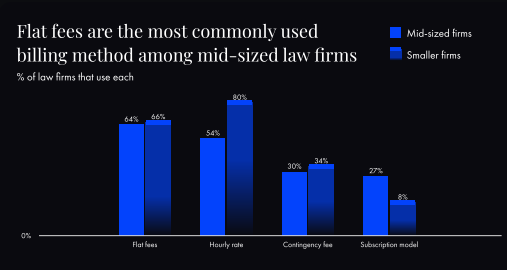
Flat fees are now the most common billing method among mid-sized firms, outpacing hourly rates.
Firms are shifting away from hourly billing due to AI’s impact on time-based work and client preference for predictable pricing.
Subscription models are also gaining traction, especially for ongoing legal services to business clients.
Despite the shift, hourly billing remains prevalent, particularly with highly varied rates by role and experience.
📈 Client Acquisition & Marketing Strategies
Mid-sized firms use multiple marketing channels: websites, SEO consultants, social media, online reviews, and referrals.
They’re less reliant on referrals than smaller firms, but invest more in digital marketing.
Tools like e-signatures, intake forms, and online scheduling directly improve conversion rates and revenue (up to 20% higher).
Chatbots are underused despite 51% of clients finding them helpful—a missed opportunity.
💸 Spending & Technology Investments
Staff salaries dominate expenses (41%), followed by rent, marketing, and office costs.
Mid-sized firms spend less on office expenses (5%) than solo and smaller firms, due to economies of scale and flexible work arrangements.
Spending on software and professional fees is rising rapidly—showing a strong focus on tech and professional development.
☁️ Cloud Technology Adoption
Mid-sized firms lag behind smaller firms in cloud adoption (only 38% vs. 71%).
Firms with 20–49 employees are more likely to use cloud tools than larger mid-sized firms.
Hesitation around switching legacy systems or internal decision-making bottlenecks may be holding back adoption.
🧭 Strategic Takeaways
Mid-sized firms embracing AI + modern billing models + tech investments are poised to outpace competitors.
The real threat isn’t automation—it’s firms that adapt faster.
Cloud-based tools, client intake tech, and AI are critical for efficiency, growth, and client satisfaction.
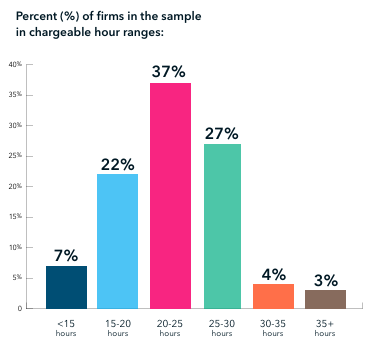
A recent report, “Strategic Sector Insights for the Legal Profession 2025: Mid-Sized Firms”, published by The Law Society and MHA, reveals a striking trend:
👉 More than 50% of mid-sized law firms report that their lawyers bill less than 25 hours per week on average. 👉 Less than 3% of lawyers at these firms bill anywhere close to the full 40-hour workweek.
While it’s unrealistic to expect lawyers to bill every hour they work, these numbers highlight why alternative pricing models are a key priority for firm leaders in 2025.
⚖️ What does the future of legal pricing look like? If you’re exploring value-based pricing, subscription models, or hybrid fee structures, let’s talk!
📩 DM me to discuss innovative pricing strategies for law firms.
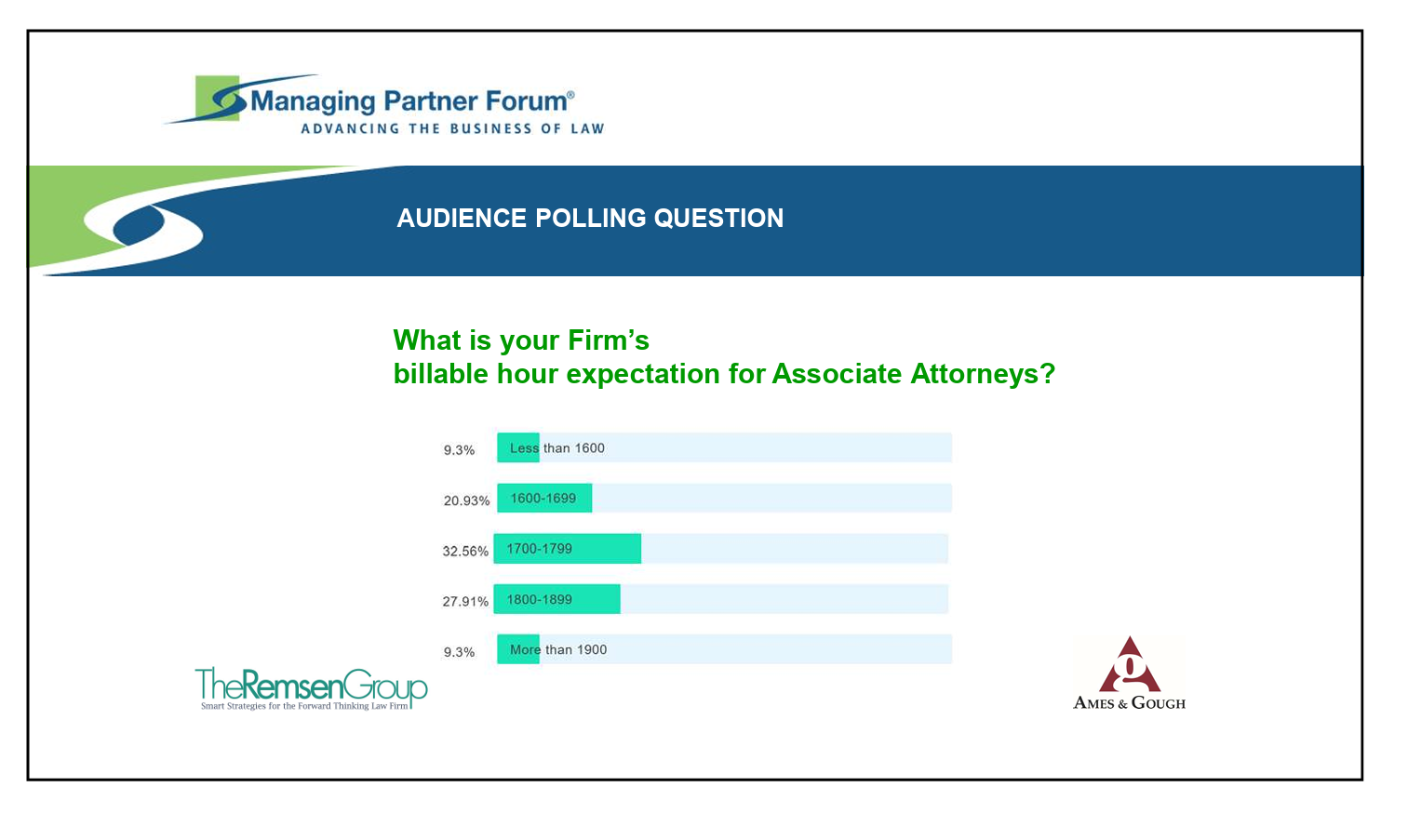
It’s interesting to note that nearly 70% of respondents expect their Associate Attorneys to bill over 1700 hours a year, with almost 10% expecting over 1900 billable hours per year.
That’s a lot of billable hours! And if we consider the ‘10-20-30-40 Leverage Rule‘, then the implication is very bleak for junior lawyers!
And as I say to those entering the legal profession who need some understanding of how many hours they need to work to meet their billable hour target, take a look at Yale Law School’s ‘The Truth About The Billable Hour‘.
While I am all for the profit motive, I maintain that if owners and managers of law firms want to understand why they have a high attrition / burnout rate in their teams, take a close look at what expecting someone to bill 1700 hours a year is actually doing to them!
I put a post up last week on LinkedIn, off the back of a very interesting blog by Jordan Furlong on his Substack feed: ‘The legal world in 10 years (if we’re really lucky)‘, that got some social media traction so I thought I would re-share here.
At the heart of my LinkedIn post was a comment Jordan makes on – what he calls – High-Value Retainers and the effect Gen AI will have on these fee arrangements. To quote:
High-Value Retainers Thanks to Gen AI’s consumption of many traditional tasks, lawyers have moved up the value ladder, going beyond “bet-the-company” and “run-the-company” work to start offering “grow-the-company” work (or “advance-the-individual”). These are engagements in which lawyers ask: “How can I improve your situation? What are your near-term and long-term goals? How can I help you anticipate problems and prevent them before they happen? How can I bring you more stability and peace of mind? How can I be your advocate and counsellor in whatever you need?”
While I think Jordan’s point is an excellent one, mine was this: “Do you think this could work in 10 years time?“
Because if you think it could: Why are you waiting 10 years for AI to develop in order to have this conversation – have this conversation with your clients now!
In that, it’s not a 10+ years from now discussion. It’s not a 10+ years from now problem. It’s a HERE AND NOW problem and a here and now discussion.
In the 1980s it took Concord a little under 3 hours to fly New York to London.
Today [2023], 40 years later, the quickest you can travel that exact same route (New York City – London) is a little over 5 hours.
…And this is why you should always bill by the hour – it ensures your clients get the best possible experience (after all, why would you want to fly Concord!) and it incentives innovation!
Tesla, Elon Musk’s EV carmaker, published its Q3 results earlier today (Australia time). Profits plunged 44 per cent. But, from my perspective this was the interesting part: “after it cuts prices to boost sales“.
Let’s unpack that for a second: Tesla “slashed prices by around 25 per cent in the United States during the last year” – “putting the priority on sales rather than profit“.
As it happens, this is also a common trait of professional services firms: prioritizing getting the deal done over making an actual profit – including agreeing to heavy “volume discounts”.
As the Tesla results show though, any price discount you give comes directly from profit – not sales revenue.
So the price discount you offer your clients is essentially compounded on your bottom line – 10% is not 10%, it’s more like 30%.
Or in the case of Tesla: a 25% price discount has resulted in a 44% plunge in profit.
Something to think about when you are next thinking about what pricing options you have available to you.
And please, don’t follow this advice:
“I view it as a way to defend market share at the expense of margin” .
Kevin Roberts, director of industry insights and analytics at CarGurus, an online auto sales site
In professional services firms, market share should never Trump (pun intended) profit.
As usual, if you need any help with any of this, feel free to reach out.
If you don’t have time to read Andrew Malocussions article, and I suggest you do because it’s actually very interesting, the long and short of it is that the reason why big (read global) law firms are losing millions in revenue (opportunity) is because…
… their pricing teams are too small.
All I have to say is, “seriously”!
Do yourself a favour, go back in time 5 years and work out for yourself whether or not the fact that law firm pricing teams are too small is the real reason they may or may not be losing millions of dollars in revenue.
For my part, this type of thinking doesn’t pass the pub test!
Feel free to reach out to me if you want to talk through any pricing strategy related issues/questions.







 RWS_01's B[D]log