business development

Insights from the 2025 EY Law General Counsel Study: 60% plan to increase ALSP usage in the next year

The recently published 2025 EY Law General Counsel Study reveals how corporate in-house legal departments are responding to major external disruptions—ranging from geopolitical instability and regulatory complexity to technological transformation—to drive confident innovation.

While these trends demand agility and modernisation in legal operations and risk management, internal barriers like budget limitations and resistance to change often slow progress.


📊 Key Findings

1. 🌐 Legal Teams Face Rising External Pressures

In-house legal departments identify three major disruptors shaping their strategies:

  • 🌍 Geopolitical uncertainty (76%)
  • 📜 Complex regulatory environments (75%)
  • 💡 Rapid technology evolution (74%)

These factors are pushing legal teams to rethink their approaches to compliance, governance and operational efficiency.

2. 📉 Internal Budget Pressures Persist Despite Growth Expectations

  • 📈 83% of legal departments expect budget increases in 2025.
  • However, 87% cite cost control as a top priority 💰
  • 61% point to limited budgets as a significant hurdle in optimizing legal sourcing strategies 💼

🚀 Strategic Recommendations

1. 🧠 Gain Deeper Operational Insights

Engaging stakeholders and assessing operational maturity enhances planning and execution. Yet only 11% of departments conducted stakeholder interviews last year—an untapped opportunity.

2. 💵 Optimize Legal Spend and Increase Transparency

With only 24% completing recent spend assessments, legal departments should:

  • 🔍 Analyze spend in detail
  • 💳 Consider chargebacks
  • 📊 Improve transparency and financial oversight

3. 🤝 Embrace a Diversified Legal Sourcing Model

To increase agility and expertise:

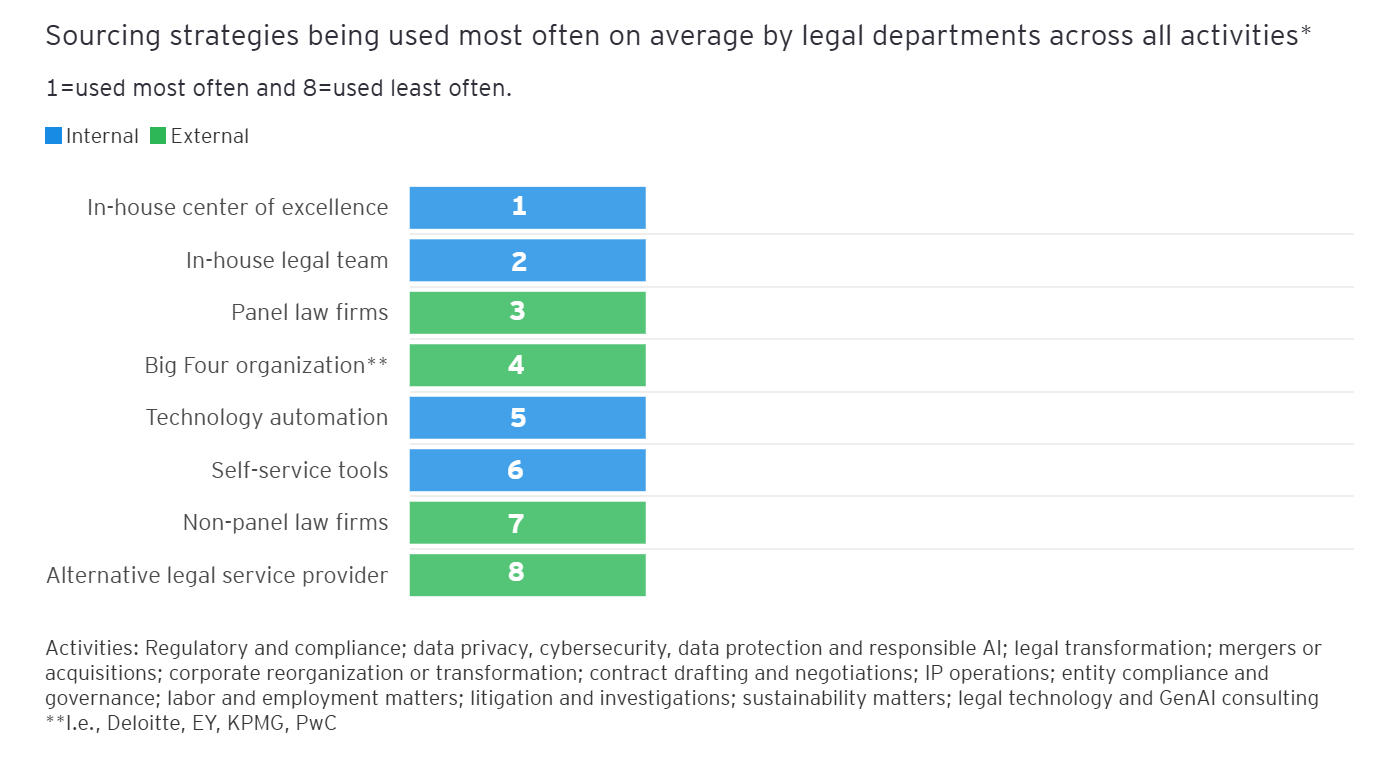
  • Legal teams are tapping into Alternative Legal Service Providers (ALSPs) ⚖️
  • 60% plan to increase ALSP usage in the next year ⏩

4. 🧑‍🏫 Invest in Legal Talent Development

With 64% prioritizing upskilling and reskilling, focus areas include:

  • 🌱 Employee well-being
  • 🧭 Career development
  • 🎯 Talent retention

5. 📏 Align Risk Management Across the Enterprise

Fewer than 50% have a clearly defined risk governance model:

  • 🤝 Cross-functional collaboration is essential
  • ⚠️ Clear standards and risk tolerance must be established

6. 🤖 Leverage Legal Technology and Emerging Tools

While 75% aim to refine their legal tech strategies, only 25% prioritize Generative AI (GenAI):

  • 📈 Opportunity to automate tasks like contract review and compliance
  • 🧩 Build a tech roadmap that aligns with business goals

🏁 Conclusion

The 2025 EY Law General Counsel Study highlights the urgency for legal departments to adapt amid growing complexity.

By embracing innovation in sourcing, talent, tech, and governance, legal teams can build more agile, efficient, and future-proof operations.

Report: Clio’s 2025 Legal Trends Report For Mid-Sized Law Firms

Clio’s 2025 Legal Trends Report for Mid-Sized Law Firms provides a comprehensive look at how mid-sized law firms in the US are adapting to industry changes; particularly as it relates to AI adoption, billing models, client acquisition, and technology investments.

Although the results are based on data from US-based firms, the results are arguably applicable here in Australia and more broadly so here’s a summary of the key takeaways:

🚀 AI Adoption & Transformation

  • Mid-sized firms (20+ employees) are now leading AI adoption in legal tech, surpassing smaller firms.
  • 93% of surveyed professionals in these firms use AI, with 51% using it widely or universally.
  • Common AI tools include legal research platforms, document automation, eDiscovery, and predictive legal analytics.
  • AI is viewed as a way to increase efficiency, reduce costs, and improve client engagement.

💰 Billing Models & Pricing Trends

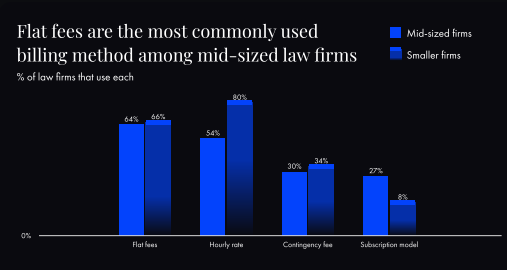
  • Flat fees are now the most common billing method among mid-sized firms, outpacing hourly rates.
  • Firms are shifting away from hourly billing due to AI’s impact on time-based work and client preference for predictable pricing.
  • Subscription models are also gaining traction, especially for ongoing legal services to business clients.
  • Despite the shift, hourly billing remains prevalent, particularly with highly varied rates by role and experience.

📈 Client Acquisition & Marketing Strategies

  • Mid-sized firms use multiple marketing channels: websites, SEO consultants, social media, online reviews, and referrals.
  • They’re less reliant on referrals than smaller firms, but invest more in digital marketing.
  • Tools like e-signatures, intake forms, and online scheduling directly improve conversion rates and revenue (up to 20% higher).
  • Chatbots are underused despite 51% of clients finding them helpful—a missed opportunity.

💸 Spending & Technology Investments

  • Staff salaries dominate expenses (41%), followed by rent, marketing, and office costs.
  • Mid-sized firms spend less on office expenses (5%) than solo and smaller firms, due to economies of scale and flexible work arrangements.
  • Spending on software and professional fees is rising rapidly—showing a strong focus on tech and professional development.

☁️ Cloud Technology Adoption

  • Mid-sized firms lag behind smaller firms in cloud adoption (only 38% vs. 71%).
  • Firms with 20–49 employees are more likely to use cloud tools than larger mid-sized firms.
  • Hesitation around switching legacy systems or internal decision-making bottlenecks may be holding back adoption.

🧭 Strategic Takeaways

  • Mid-sized firms embracing AI + modern billing models + tech investments are poised to outpace competitors.
  • The real threat isn’t automation—it’s firms that adapt faster.
  • Cloud-based tools, client intake tech, and AI are critical for efficiency, growth, and client satisfaction.

You can download the full report here.

Get in touch if you want to discuss the outcomes of this Report or need assistance with your strategy.

📩 richard@gsjconsulting.com.au

Key Takeaways from the 2025 Law Society Financial Benchmarking Survey

The latest Law Society (England and Wales) Financial Benchmarking Survey has sparked significant discussion on social media today. The findings highlight some critical financial challenges for mid-sized law firms, particularly in terms of profitability, chargeable hours and cash flow management.

📊 Top 3 Key Findings:

1️⃣ Fee Earners’ Costs vs. Fees Charged

  • The median hourly cost of a fee earner (based on 1,100 chargeable hours) was £123.40, while the median hourly fees per fee earner stood at £133.01.
  • 🔴 93% of fees earned are being used to cover costs, leaving minimal margin for profitability.

2️⃣ Shortfall in Chargeable Hours

  • The average recorded chargeable hours per fee earner increased slightly to 773 hours (up from 765 in 2023).
  • ⚠️ However, this is still well below the 1,100-hour target—a shortfall of over 300 hours per year per lawyer.

3️⃣ Increase in Lock-Up Days

  • Year-end lock-up days (including work in progress and debtors) rose from 143 to 146 days.
  • This trend indicates longer cash flow cycles, which can put pressure on a firm’s financial stability.

🚨 What Should Law Firms Do?

These figures underscore the urgent need for better financial planning, sustainable profitability strategies, and operational efficiency. Some key focus areas include:

✔️ Improving revenue streams—exploring retainer-based models for better income predictability.
✔️ Enhancing productivity—have a robust and actionable business development plan for all lawyers!
✔️ Optimise cash flow—reduce lock-up days by streamlining billing and collections processes.

🔗 Full Report: Read the Law Society Financial Benchmarking Survey 2025

📢 Looking to bridge the 300+ hour gap per lawyer? Or interested in strategies for growing a profitable legal practice sustainably? Let’s talk! Get in touch today.

rws_01

richard@gsjconsulting.com.au

Billable Hours Per Week at Mid-Sized Law Firms: What the Data Reveals

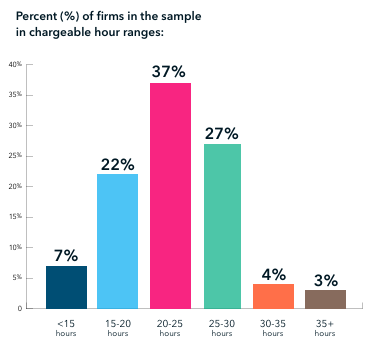
A recent report, “Strategic Sector Insights for the Legal Profession 2025: Mid-Sized Firms”, published by The Law Society and MHA, reveals a striking trend:

👉 More than 50% of mid-sized law firms report that their lawyers bill less than 25 hours per week on average.
👉 Less than 3% of lawyers at these firms bill anywhere close to the full 40-hour workweek.

While it’s unrealistic to expect lawyers to bill every hour they work, these numbers highlight why alternative pricing models are a key priority for firm leaders in 2025.

⚖️ What does the future of legal pricing look like? If you’re exploring value-based pricing, subscription models, or hybrid fee structures, let’s talk!

📩 DM me to discuss innovative pricing strategies for law firms.

Thomson Reuters Releases 2024 Midyear Update on the Australian Legal Market – Key Takeaway

Earlier today, the Thomson Reuters Institute published its Midyear Update on the Australian Legal Market, providing valuable half-year insights into industry trends in the Australian legal market.

There’s a lot to unpack in the Report, and I highly recommend you download it. That said, here are my top takeaways:

What’s Happening with Non-Equity Partners?
Is there an underlying story in the Non-Equity Partner segment? The data suggests there might be more to explore.

Equity Partners Carrying the Load?
If legal market demand and worked rates are up in 2024, yet the average billable hours per lawyer are down, it raises a big question—are Equity Partners absorbing the extra workload? If so, why?

Billable Hours Decline
With 12 months in a year, many law firms have lawyers billing less than 1,500 hours annually. What does this mean for profitability and productivity?

If you’re looking to refine your pricing strategy or need guidance on law firm profitability, feel free to get in touch. In the meantime, download the two-page update and see the data for yourself!

rws_01

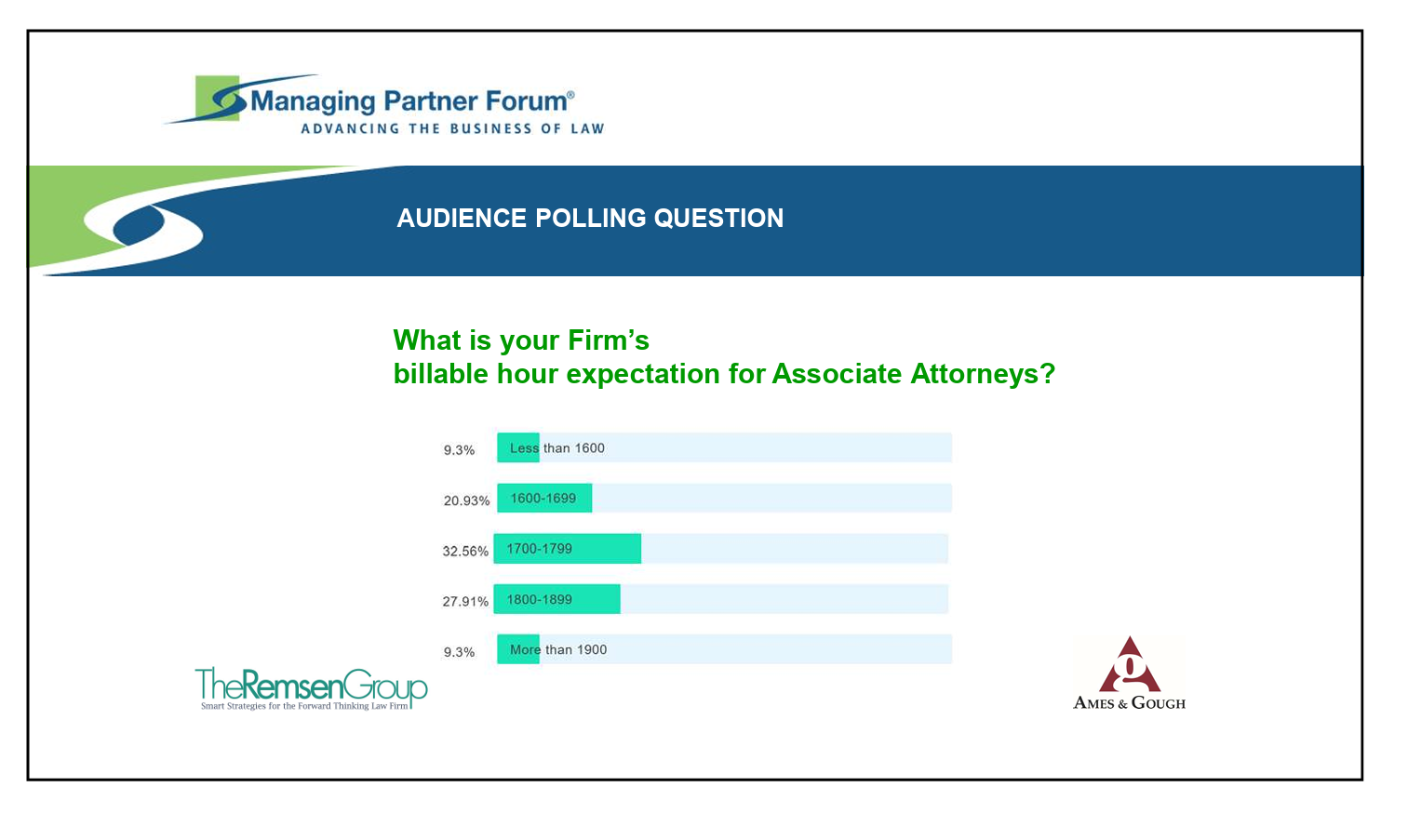
Billable hour expectation for Associate Attorneys

I recently posted about the ‘Billable hours target for first-year lawyers at selected [Australian] law firms‘ and one of the most read posts on this blog is from way back in August 2016 – ‘Why asking someone to work 2,000 billable hours a year will kill their spirit‘, so when the Managing Partner Forum recently published the above results (admittedly from mostly American Managing Partners) from an audience polling question at one of its webinars on the issue of billable hour expectation for Associate Attorneys, I thought I would share it.

It’s interesting to note that nearly 70% of respondents expect their Associate Attorneys to bill over 1700 hours a year, with almost 10% expecting over 1900 billable hours per year.

That’s a lot of billable hours! And if we consider the ‘10-20-30-40 Leverage Rule‘, then the implication is very bleak for junior lawyers!

And as I say to those entering the legal profession who need some understanding of how many hours they need to work to meet their billable hour target, take a look at Yale Law School’s ‘The Truth About The Billable Hour‘.

While I am all for the profit motive, I maintain that if owners and managers of law firms want to understand why they have a high attrition / burnout rate in their teams, take a close look at what expecting someone to bill 1700 hours a year is actually doing to them!

rws_01

Are Directories out of favour?

Having just posted yesterday on ‘Directory and Award Submissions‘, I thought it was somewhat timely that the team at BTI Consulting published the results of a survey they have conducted with over 350 corporate counsel which showed:

  • Only 4% still find rankings valuable
  • 18% like them but aren’t strongly influenced
  • 33% are ambivalent
  • 45% express outright disinterest

Some of the commentary is just brilliant, including this gem:

“I assume all my attorneys are ranked somewhere.”

Go check out the article. It’s a good [short] read.

rws_01

Legal directories or legal awards?

Following a post I made on LinkedIn last week: ‘5 Tips to help make your next directory submission standout from the crowd‘ I was asked the following question:

With limited resources, should our firm prioritize directory or award submissions?

An excellent question.

So good, I thought I would try and answer it in this week’s BD Tips post.

The Goal: Brand awareness

When it comes to gaining brand recognition and visibility – for your law firm and its partners/principals – two leading strategies are directory and award submissions. Both have their own unique benefits, so let’s take a look at each in turn:

1. Directory submissions

Legal directories are comprehensive listings of law firms and individual lawyers. They provide potential clients with information about legal service providers – including leading lawyers in practice areas and client reviews.

Benefits

  • Increased Brand Awareness: Being listed in a reputable legal directory – such as Chambers, Legal 500, IFLR 1000, WTR or IP Stars, can enhance your firm’s online presence and make it easier for potential clients to find you.
  • Client Feedback/Testimonials: Most directories have clients feedback/reviews comments. These can be used in Marketing material (such as bids and tenders / capability statements / on your website) to help build trust in your firm’s brand and attract new business.

Cons

  • Cost: Submissions to all legal directories take significant time and input from fee earners. This time is otherwise billable on client matters.
  • Time-consuming: Submitting to directories is a time-consuming project.
  • Long lead time: Thinking just because you’ve submitted to a directory today means you will be listed straight away is naïve. Getting listed in a directory takes time. Like most things, it needs a strategic approach!

2. Award Submissions

Legal awards recognize excellence in various aspects of legal practice. Awards can be given to individual lawyers, law firms, or specific practice areas based on criteria such as innovation, client service, and case outcomes.

Benefits

  • Prestige: Winning or being shortlisted for a legal award can significantly boost your firm’s and it’s partners reputation and prestige within an industry and beyond.
  • Marketing Opportunities: Awards can be used in Marketing materials, press releases, and social media to attract new clients and retain existing ones.
  • Networking Events: Award ceremonies provide opportunities for lawyers to network with industry peers, potential clients, and referral sources.
  • Cost: Generally, award submissions are cost effective.

Cons

  • Competition: The process can be highly competitive and there are no guarantees of winning!

But, which should we do?

The decision on whether to do a directory or award submission ultimately depends on your firm’s current brand awareness strategy and goals.

If your firm is looking to improve brand awareness, a legal directory submission might be the way to go.

On the other hand, if your firm’s primary goal is to boost your firm’s reputation and gain recognition within an industry in the short-term, legal award submission can be a much more beneficial tactic.

The fact is that both play a critical role in enabling your firm’s marketing and business development strategy by improving visibility, credibility, and client trust.

In a perfect world, you get to do both.

In an imperfect world: go awards for the short game, and directories for the long game!

Richard & GSJ

📩 richard@gsjconsulting.com.au

𝐁𝐢𝐥𝐥𝐚𝐛𝐥𝐞 𝐡𝐨𝐮𝐫𝐬 𝐭𝐚𝐫𝐠𝐞𝐭𝐬 𝐟𝐨𝐫 𝐟𝐢𝐫𝐬𝐭-𝐲𝐞𝐚𝐫 𝐥𝐚𝐰𝐲𝐞𝐫𝐬 𝐚𝐭 𝐬𝐞𝐥𝐞𝐜𝐭𝐞𝐝 [Australian] 𝐥𝐚𝐰 𝐟𝐢𝐫𝐦𝐬

As we start out on 2025, the 𝑨𝒖𝒔𝒕𝒓𝒂𝒍𝒊𝒂𝒏 𝑭𝒊𝒏𝒂𝒏𝒄𝒊𝒂𝒍 𝑹𝒆𝒗𝒊𝒆𝒘 (AFR) has helpfully published a table today (14.01.2025) – ‘𝐁𝐢𝐥𝐥𝐚𝐛𝐥𝐞 𝐡𝐨𝐮𝐫𝐬 𝐭𝐚𝐫𝐠𝐞𝐭𝐬 𝐟𝐨𝐫 𝐟𝐢𝐫𝐬𝐭-𝐲𝐞𝐚𝐫 𝐥𝐚𝐰𝐲𝐞𝐫𝐬 𝐚𝐭 𝐬𝐞𝐥𝐞𝐜𝐭𝐞𝐝 𝐥𝐚𝐰 𝐟𝐢𝐫𝐦𝐬’ – that makes for very interesting reading.

Other than the expected billable hour targets for first year lawyers and comments on alleged “under-billing” practices at major Australian law firms, what caught my attention in the article was this comment:

“𝘖𝘯𝘭𝘺 𝘰𝘯𝘦 𝘧𝘪𝘳𝘮 – 𝘏𝘢𝘮𝘪𝘭𝘵𝘰𝘯 𝘓𝘰𝘤𝘬𝘦 – 𝘤𝘢𝘭𝘤𝘶𝘭𝘢𝘵𝘦𝘥 𝘪𝘵𝘴 𝘵𝘢𝘳𝘨𝘦𝘵𝘴 𝘥𝘪𝘧𝘧𝘦𝘳𝘦𝘯𝘵𝘭𝘺, 𝘸𝘪𝘵𝘩 𝘢𝘯 𝘦𝘲𝘶𝘢𝘵𝘪𝘰𝘯 𝘣𝘢𝘴𝘦𝘥 𝘰𝘯 𝘳𝘦𝘷𝘦𝘯𝘶𝘦 𝘳𝘢𝘵𝘩𝘦𝘳 𝘵𝘩𝘢𝘯 𝘩𝘰𝘶𝘳𝘴 𝘣𝘪𝘭𝘭𝘦𝘥. 𝘓𝘢𝘸𝘺𝘦𝘳𝘴 𝘢𝘵 𝘵𝘩𝘢𝘵 𝘧𝘪𝘳𝘮 𝘢𝘳𝘦 𝘦𝘹𝘱𝘦𝘤𝘵𝘦𝘥 𝘵𝘰 𝘣𝘳𝘪𝘯𝘨 𝘪𝘯 𝘧𝘰𝘶𝘳 𝘵𝘪𝘮𝘦𝘴 𝘵𝘩𝘦𝘪𝘳 𝘴𝘢𝘭𝘢𝘳𝘺 𝘪𝘯 𝘤𝘭𝘪𝘦𝘯𝘵 𝘧𝘦𝘦𝘴.”

I might be wrong, but in the event that Hamilton Locke charges clients by the billable hour, then I highly suspect this also translates into a yearly hourly target…

…In the event that HL charges clients fixed fees or some other type of fee arrangement, then I accept this calculation probably sets it apart.

rws_01