Earlier today The 𝘈𝘶𝘴𝘵𝘳𝘢𝘭𝘪𝘢𝘯 𝘍𝘪𝘯𝘢𝘯𝘤𝘪𝘢𝘭 𝘙𝘦𝘷𝘪𝘦𝘸 published the results of its Law Graduate Salary Range Survey.
Makes for an interesting read. On the one hand, nowhere near as high as overseas markets such as London, HK and the US. On the other hand, Grads on A$130K would have been unthinkable 5 – 10 years ago!
As we navigate 2025, Australian midsize law firms find themselves at a pivotal crossroads—balancing client expectations, talent retention and the promise (and pitfalls) of technology. The recently released 2025 Australian Midsize Law Firm Priorities Report by Actionstep offers a deep dive into what’s shaping the future for these firms.
Here’s s summary of what you need to know from the Report—and how your firm can stay ahead.
🎯 Client Satisfaction: The Cornerstone of Growth
It’s clear—client satisfaction is king. 71% of midsize firms rank it as their top priority for protecting and growing revenue. But it’s not just about delivering legal outcomes; it’s about building trust-based relationships, offering personalised service and consistently exceeding expectations.
Interestingly, firms are focusing more on deepening relationships with existing clients rather than chasing new business. In fact, 37% see expanding existing client accounts as their primary growth strategy for 2025.
✅ Takeaway: If your firm isn’t investing in client experience, you’re leaving growth on the table.
👥 Talent Retention: Your Secret Weapon
While technology grabs headlines, midsize firms know that people drive performance.
59% of firms highlight attracting and retaining talent as a top strategic priority.
Engaging work, leadership and firm culture outrank pay as key reasons employees stay.
However, when employees consider leaving, pay and remuneration become the decisive factor. This signals a clear message: while meaningful work keeps people engaged, competitive compensation keeps them committed.
✅ Takeaway: Create a workplace where talent thrives—offer challenging work, clear career paths and ensure your pay structures remain competitive.
💻 Technology & Automation: The Untapped Advantage
Despite recognising efficiency challenges, midsize firms remain cautious adopters of automation and AI:
Only 38% are actively using automation tools.
Just 5% have reached AI maturity.
Cybersecurity concerns and data privacy remain top barriers.
There’s also a noticeable gap in digital client experience. While firms excel in personalised, human-centric service, only 41% feel confident in their digital touchpoints like client portals and automated communications.
✅ Takeaway: Embrace technology—not to replace people, but to empower them. Automation can reduce workloads, freeing your team to focus on high-value client interactions.
🔐 Cybersecurity: More Than Just IT’s Problem
With client trust on the line, cybersecurity is non-negotiable. Yet, the biggest risk isn’t technology—it’s human error. Over 63% of firms cite staff behaviour (think password sharing, weak authentication practices) as their top vulnerability.
✅ Takeaway: Build a security-first culture. Regular training, robust protocols, and smart tools like multi-factor authentication are essential to protect both your firm and your clients.
🏆 5 Strategies for Midsize Law Firm Success in 2025
Acknowledge Tech Scepticism: Start small, demonstrate wins, and build confidence in automation.
Prioritise Efficiency: Use automation to tackle time constraints and free up your team for strategic work.
Enhance the Client Experience: Leverage digital tools to complement your personal service.
Strengthen Cybersecurity: Focus on both technology and employee awareness.
Put People First: Foster engaging work environments and ensure competitive compensation.
Final Thoughts
2025 presents both challenges and opportunities for Australia’s midsize law firms. Those that blend human expertise with smart technology, prioritise client relationships, and invest in their people will be best positioned to thrive in an increasingly competitive market.
The latest Law Society (England and Wales) Financial Benchmarking Survey has sparked significant discussion on social media today. The findings highlight some critical financial challenges for mid-sized law firms, particularly in terms of profitability, chargeable hours and cash flow management.
📊 Top 3 Key Findings:
1️⃣ Fee Earners’ Costs vs. Fees Charged
The median hourly cost of a fee earner (based on 1,100 chargeable hours) was £123.40, while the median hourly fees per fee earner stood at £133.01.
🔴 93% of fees earned are being used to cover costs, leaving minimal margin for profitability.
2️⃣ Shortfall in Chargeable Hours
The average recorded chargeable hours per fee earner increased slightly to 773 hours (up from 765 in 2023).
⚠️ However, this is still well below the 1,100-hour target—a shortfall of over 300 hours per year per lawyer.
3️⃣ Increase in Lock-Up Days
Year-end lock-up days (including work in progress and debtors) rose from 143 to 146 days.
This trend indicates longer cash flow cycles, which can put pressure on a firm’s financial stability.
🚨 What Should Law Firms Do?
These figures underscore the urgent need for better financial planning, sustainable profitability strategies, and operational efficiency. Some key focus areas include:
✔️ Improving revenue streams—exploring retainer-based models for better income predictability. ✔️ Enhancing productivity—have a robust and actionable business development plan for all lawyers! ✔️ Optimise cash flow—reduce lock-up days by streamlining billing and collections processes.
📢 Looking to bridge the 300+ hour gap per lawyer? Or interested in strategies for growing a profitable legal practice sustainably? Let’s talk! Get in touch today.
A recent report, “Strategic Sector Insights for the Legal Profession 2025: Mid-Sized Firms”, published by The Law Society and MHA, reveals a striking trend:
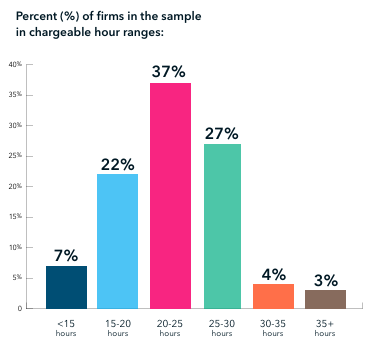
👉 More than 50% of mid-sized law firms report that their lawyers bill less than 25 hours per week on average. 👉 Less than 3% of lawyers at these firms bill anywhere close to the full 40-hour workweek.
While it’s unrealistic to expect lawyers to bill every hour they work, these numbers highlight why alternative pricing models are a key priority for firm leaders in 2025.
⚖️ What does the future of legal pricing look like? If you’re exploring value-based pricing, subscription models, or hybrid fee structures, let’s talk!
📩 DM me to discuss innovative pricing strategies for law firms.
Earlier today, the Thomson Reuters Institute published its Midyear Update on the Australian Legal Market, providing valuable half-year insights into industry trends in the Australian legal market.
There’s a lot to unpack in the Report, and I highly recommend you download it. That said, here are my top takeaways:
✅ What’s Happening with Non-Equity Partners? Is there an underlying story in the Non-Equity Partner segment? The data suggests there might be more to explore.
✅ Equity Partners Carrying the Load? If legal market demand and worked rates are up in 2024, yet the average billable hours per lawyer are down, it raises a big question—are Equity Partners absorbing the extra workload? If so, why?
✅ Billable Hours Decline With 12 months in a year, many law firms have lawyers billing less than 1,500 hours annually. What does this mean for profitability and productivity?
If you’re looking to refine your pricing strategy or need guidance on law firm profitability, feel free to get in touch. In the meantime, download the two-page update and see the data for yourself!
A recent article by BTI Consulting’s The Mad Clientist (‘Did Clients Just Go Sour on Rankings and Directories?’ published on 12 February 2025) states that:
Thought leadership now outweighs rankings – especially when forming new relationships.
While we talk often about “thought leadership” in professional services, I’m not entirely sure we understand the mechanics and actualities of what constitutes “thought leadership”.
For a start, if you say you’re a “thought leader” chances are you’re not – as only others can pin that tag on you!
So, I thought I would do quick run through what thought leadership means to me, as well as some ways you might be able to demonstrate your knowledge in such a way as others start to consider you a thought leader!
What is ‘Thought Leadership’?
Thought leadership is the art of positioning yourself, or your firm, as a leading authority in a particular area – industry or field – by sharing (typically for free) valuable insights, expertise, and innovative ideas.
Thought leaders influence their audience through content such as articles, blogs, speeches, books, research and social media engagement.
Key Aspects of Thought Leadership
Expertise & authority: Thought leaders have extensive knowledge in their field and are trusted sources of information.
Innovative thinking: Thought leaders challenge conventional wisdom and introduce new perspectives or solutions.
Content creation: Though leaders share insights through blogs, articles, whitepapers, podcasts, videos, or public speaking.
Engagement & influence: Thought leaders actively participate in discussions, mentor others and drive industry trends.
Authenticity & credibility: Genuine thought leaders prioritise value over self-promotion, building trust through consistency.
How can I display thought leadership?
Many professional firms limit their content strategy to publishing articles on their firm website and stopping there. While this is a good starting point, it doesn’t fully leverage the power of content marketing to attract, engage, and convert potential clients.
To expand your reach and establish your authority as a thought leader, consider adopting the following to your content marketing strategy:
Blog posts: Either via your own blog page or your firm’s (or even both), regularly provide in-depth insights, case studies, and industry updates. From time-to-time offer to guest post on other people’s blogs as well.
Newspaper comments and articles: Write a regular column in a reputable newspaper on your area of expertise. You can also become a source of commentary – newspapers are always seeking commentary from industry leaders.
Whitepapers & eBooks: Offer comprehensive research findings, legal guides, and thought leadership content. Look to position both yourself and/or your firm as the trusted authority in that area/field.
Videos: Create a YouTube or TikTok account and make videos that help explain intricate and complicated topics in a dynamic, accessible and easy to consume way.
Webinars & Live Streams: Host real-time discussions, Q&A sessions, and educational webinars – either on your website or via other platforms such as LinkedIn.
Podcasts: Either host your own podcast or provide expert insights on podcasts hosted by others.
Social Media posts: Engage in relevant discussions on platforms like LinkedIn, Instagram, Facebook and X.
Email Newsletters: Share valuable insights, firm updates, and case studies directly with subscribers via email providers such as MailChimp.
Bringing it all together
Thought leaders are recognised by others for their deep knowledge of a subject matter and so have the ability to shape conversations, influence decisions, and inspire others. These are all attributes that will help expand your audience reach and establish credibility in your area – leading to a higher number of requests for assistance and a bigger book of business!
Feel free to get in touch if you need help with your thought leadership strategy.
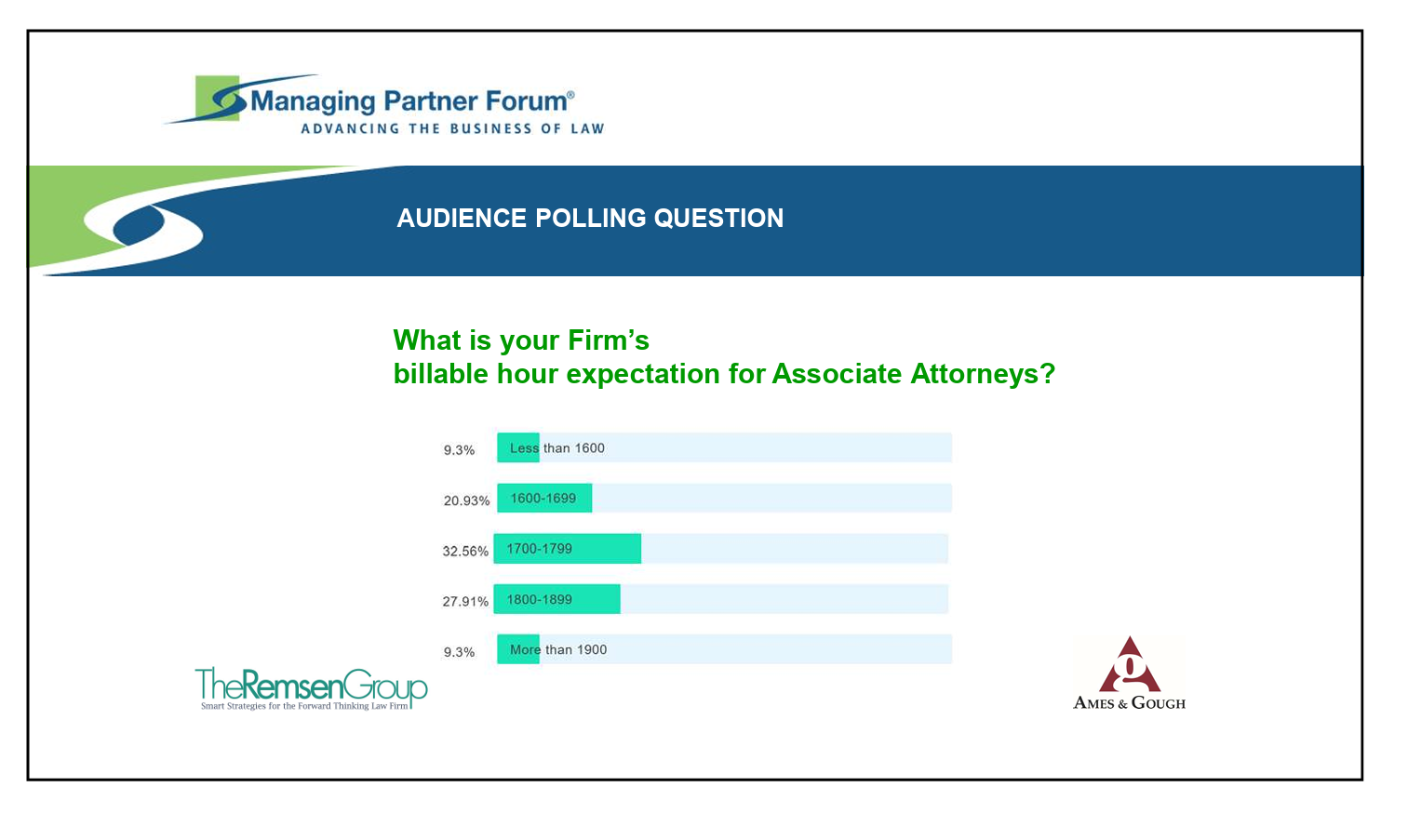
It’s interesting to note that nearly 70% of respondents expect their Associate Attorneys to bill over 1700 hours a year, with almost 10% expecting over 1900 billable hours per year.
That’s a lot of billable hours! And if we consider the ‘10-20-30-40 Leverage Rule‘, then the implication is very bleak for junior lawyers!
And as I say to those entering the legal profession who need some understanding of how many hours they need to work to meet their billable hour target, take a look at Yale Law School’s ‘The Truth About The Billable Hour‘.
While I am all for the profit motive, I maintain that if owners and managers of law firms want to understand why they have a high attrition / burnout rate in their teams, take a close look at what expecting someone to bill 1700 hours a year is actually doing to them!
Having just posted yesterday on ‘Directory and Award Submissions‘, I thought it was somewhat timely that the team at BTI Consulting published the results of a survey they have conducted with over 350 corporate counsel which showed:
Only 4% still find rankings valuable
18% like them but aren’t strongly influenced
33% are ambivalent
45% express outright disinterest
Some of the commentary is just brilliant, including this gem:
With limited resources, should our firm prioritize directory or award submissions?
An excellent question.
So good, I thought I would try and answer it in this week’s BD Tips post.
The Goal: Brand awareness
When it comes to gaining brand recognition and visibility – for your law firm and its partners/principals – two leading strategies are directory and award submissions. Both have their own unique benefits, so let’s take a look at each in turn:
1. Directory submissions
Legal directories are comprehensive listings of law firms and individual lawyers. They provide potential clients with information about legal service providers – including leading lawyers in practice areas and client reviews.
Benefits
Increased Brand Awareness: Being listed in a reputable legal directory – such as Chambers, Legal 500, IFLR 1000, WTR or IP Stars, can enhance your firm’s online presence and make it easier for potential clients to find you.
Client Feedback/Testimonials: Most directories have clients feedback/reviews comments. These can be used in Marketing material (such as bids and tenders / capability statements / on your website) to help build trust in your firm’s brand and attract new business.
Cons
Cost: Submissions to all legal directories take significant time and input from fee earners. This time is otherwise billable on client matters.
Time-consuming: Submitting to directories is a time-consuming project.
Long lead time: Thinking just because you’ve submitted to a directory today means you will be listed straight away is naïve. Getting listed in a directory takes time. Like most things, it needs a strategic approach!
2. Award Submissions
Legal awards recognize excellence in various aspects of legal practice. Awards can be given to individual lawyers, law firms, or specific practice areas based on criteria such as innovation, client service, and case outcomes.
Benefits
Prestige: Winning or being shortlisted for a legal award can significantly boost your firm’s and it’s partners reputation and prestige within an industry and beyond.
Marketing Opportunities: Awards can be used in Marketing materials, press releases, and social media to attract new clients and retain existing ones.
Networking Events: Award ceremonies provide opportunities for lawyers to network with industry peers, potential clients, and referral sources.
Cost: Generally, award submissions are cost effective.
Cons
Competition: The process can be highly competitive and there are no guarantees of winning!
But, which should we do?
The decision on whether to do a directory or award submission ultimately depends on your firm’s current brand awareness strategy and goals.
If your firm is looking to improve brand awareness, a legal directory submission might be the way to go.
On the other hand, if your firm’s primary goal is to boost your firm’s reputation and gain recognition within an industry in the short-term, legal award submission can be a much more beneficial tactic.
The fact is that both play a critical role in enabling your firm’s marketing and business development strategy by improving visibility, credibility, and client trust.
In a perfect world, you get to do both.
In an imperfect world: go awards for the short game, and directories for the long game!
As we start out on 2025, the 𝑨𝒖𝒔𝒕𝒓𝒂𝒍𝒊𝒂𝒏 𝑭𝒊𝒏𝒂𝒏𝒄𝒊𝒂𝒍 𝑹𝒆𝒗𝒊𝒆𝒘 (AFR) has helpfully published a table today (14.01.2025) – ‘𝐁𝐢𝐥𝐥𝐚𝐛𝐥𝐞 𝐡𝐨𝐮𝐫𝐬 𝐭𝐚𝐫𝐠𝐞𝐭𝐬 𝐟𝐨𝐫 𝐟𝐢𝐫𝐬𝐭-𝐲𝐞𝐚𝐫 𝐥𝐚𝐰𝐲𝐞𝐫𝐬 𝐚𝐭 𝐬𝐞𝐥𝐞𝐜𝐭𝐞𝐝 𝐥𝐚𝐰 𝐟𝐢𝐫𝐦𝐬’ – that makes for very interesting reading.
Other than the expected billable hour targets for first year lawyers and comments on alleged “under-billing” practices at major Australian law firms, what caught my attention in the article was this comment:
I might be wrong, but in the event that Hamilton Locke charges clients by the billable hour, then I highly suspect this also translates into a yearly hourly target…
…In the event that HL charges clients fixed fees or some other type of fee arrangement, then I accept this calculation probably sets it apart.








 RWS_01's B[D]log