
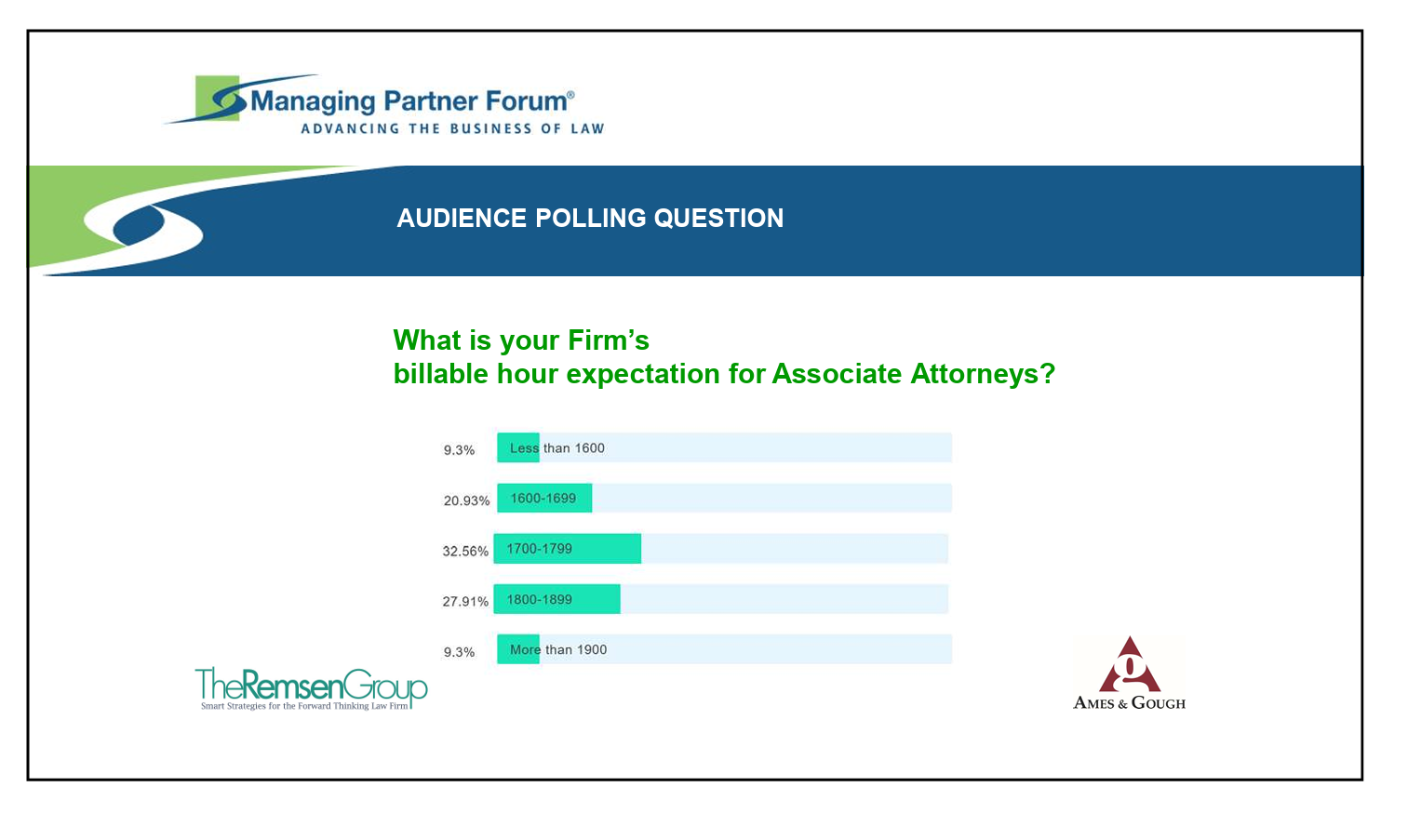
According to a post by Casey Sullivan of Bloomberg, earlier this week US law firm Crowell & Moring announced that it would increase its billable hour requirement for associates, from 1,900 hours per year to 2,000 per year. This new target will take effect 1 September 2016, but on the plus side 50 pro bono hours will count as billable.
15 Years ago I would have cried out “all kudos to you”. Back then my yearly billable target for an English ‘Magic Circle’ firm was 1,400 hours and I flogged my guts out to achieve that. So if you can effectively put 50% of billables on top of what I was doing (and trust me when I say I wasn’t going home at least one day a week), then you’re a better person than I (or so I would have said then).
But if you really need validation of what asking someone to work 2,000 billable hours a year means, then I would like to recommend you read “The Truth about the Billable Hour” by no less an institution than Yale University. In that publication, Yale caution aspiring lawyers that if you are being asked to “bill” 2201 hour, you need to be “at work” (includes travel time and lunch, etc.) 3058.
Taking that further, from an Australian law perspective, if you are being asked to bill 2,000 hours a year then you need to bill 8.3 hours a day (assuming a 48 week year and you never get sick; which, if you are being asked to do this, you most likely will be). That means you are very likely going to need to be “in the office” around 12 hours a day – and that assumes no write-off by your partner or leakage.
But here’s the question: “What difference does this make?”
I ask this because I wholly agree with the following comment my friend Kirsten Hodgson made when I posted a link to this article on LinkedIn:
“why would you reward the number of hours someone spends working? Surely it would be better to focus on how to deliver value smarter and more quickly. This doesn’t incentivize innovation or any type of process improvement.”
Exactly right, you’re measuring all the wrong things!
Leaving aside the Balance Scorecard argument, asking someone to do 2,000 billable hours a year doesn’t take into account:
- client satisfaction
- realisation (it’s a utilisation metric)
- working smarter
- innovation
or many other metrics.
And for those who may point out the benefits of this including 50 hours pro bono I say this: the Australian Pro Bono Centre National Pro Bono ‘Aspirational Target’ (ie, where we would like to get to), is 35 hours per lawyer per year.
But probably more importantly than all of this is this:
– if you ask someone to do this, then you really leave them very little time to do anything else.
This really should be a concern, on the business front because you leave almost no time whatsoever to train them in the business of law – ie, you kill any entrepreneurial spirit they may have. And, crucially, the only metric that really counts to them is that all important 2,000 billable hours (keep in mind that like I was, they’re very young). Which for a profession that has the mental health issues we do, is not good.
For all of these reasons, I’m hoping no other law firm follows this. But sadly I think they will.
Oh, and if you are a law firm client reading this post you might just want to look up whether your local jurisdiction has a “Lemon Law” rule that applies to provision of a service.
RWS_01

 RWS_01's B[D]log