
legal technology

Actionstep Survey: 2025 Roadmap for Australian Midsize Law Firms: Priorities, Challenges & Opportunities

As we navigate 2025, Australian midsize law firms find themselves at a pivotal crossroads—balancing client expectations, talent retention and the promise (and pitfalls) of technology. The recently released 2025 Australian Midsize Law Firm Priorities Report by Actionstep offers a deep dive into what’s shaping the future for these firms.

Here’s s summary of what you need to know from the Report—and how your firm can stay ahead.

🎯 Client Satisfaction: The Cornerstone of Growth

It’s clear—client satisfaction is king.
71% of midsize firms rank it as their top priority for protecting and growing revenue. But it’s not just about delivering legal outcomes; it’s about building trust-based relationships, offering personalised service and consistently exceeding expectations.

Interestingly, firms are focusing more on deepening relationships with existing clients rather than chasing new business. In fact, 37% see expanding existing client accounts as their primary growth strategy for 2025.

Takeaway: If your firm isn’t investing in client experience, you’re leaving growth on the table.


👥 Talent Retention: Your Secret Weapon

While technology grabs headlines, midsize firms know that people drive performance.

  • 59% of firms highlight attracting and retaining talent as a top strategic priority.
  • Engaging work, leadership and firm culture outrank pay as key reasons employees stay.

However, when employees consider leaving, pay and remuneration become the decisive factor. This signals a clear message: while meaningful work keeps people engaged, competitive compensation keeps them committed.

Takeaway: Create a workplace where talent thrives—offer challenging work, clear career paths and ensure your pay structures remain competitive.


💻 Technology & Automation: The Untapped Advantage

Despite recognising efficiency challenges, midsize firms remain cautious adopters of automation and AI:

  • Only 38% are actively using automation tools.
  • Just 5% have reached AI maturity.
  • Cybersecurity concerns and data privacy remain top barriers.

There’s also a noticeable gap in digital client experience. While firms excel in personalised, human-centric service, only 41% feel confident in their digital touchpoints like client portals and automated communications.

Takeaway: Embrace technology—not to replace people, but to empower them. Automation can reduce workloads, freeing your team to focus on high-value client interactions.


🔐 Cybersecurity: More Than Just IT’s Problem

With client trust on the line, cybersecurity is non-negotiable. Yet, the biggest risk isn’t technology—it’s human error. Over 63% of firms cite staff behaviour (think password sharing, weak authentication practices) as their top vulnerability.

Takeaway: Build a security-first culture. Regular training, robust protocols, and smart tools like multi-factor authentication are essential to protect both your firm and your clients.


🏆 5 Strategies for Midsize Law Firm Success in 2025

  1. Acknowledge Tech Scepticism: Start small, demonstrate wins, and build confidence in automation.
  2. Prioritise Efficiency: Use automation to tackle time constraints and free up your team for strategic work.
  3. Enhance the Client Experience: Leverage digital tools to complement your personal service.
  4. Strengthen Cybersecurity: Focus on both technology and employee awareness.
  5. Put People First: Foster engaging work environments and ensure competitive compensation.

Final Thoughts

2025 presents both challenges and opportunities for Australia’s midsize law firms. Those that blend human expertise with smart technology, prioritise client relationships, and invest in their people will be best positioned to thrive in an increasingly competitive market.

Is your firm ready to seize the moment?

rws_01
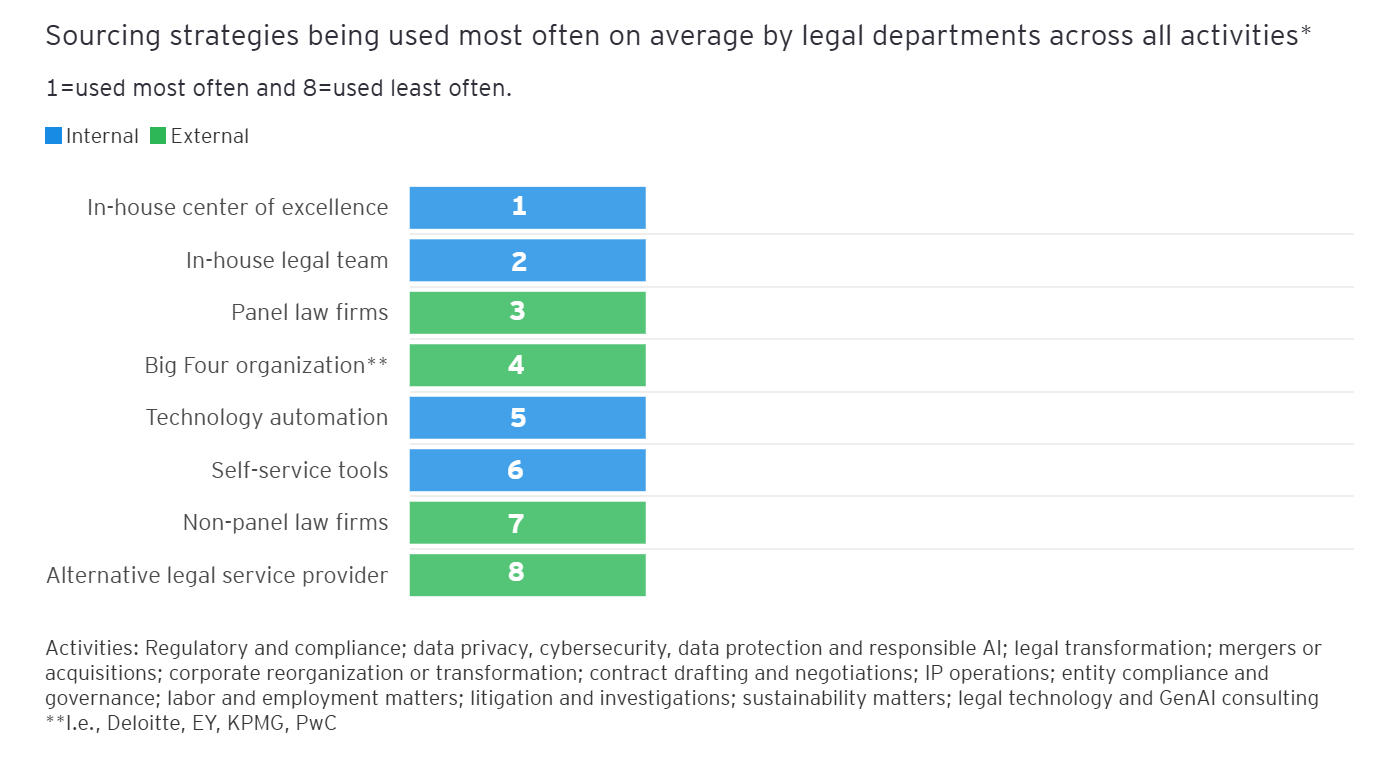
Insights from the 2025 EY Law General Counsel Study: 60% plan to increase ALSP usage in the next year

The recently published 2025 EY Law General Counsel Study reveals how corporate in-house legal departments are responding to major external disruptions—ranging from geopolitical instability and regulatory complexity to technological transformation—to drive confident innovation.

While these trends demand agility and modernisation in legal operations and risk management, internal barriers like budget limitations and resistance to change often slow progress.


📊 Key Findings

1. 🌐 Legal Teams Face Rising External Pressures

In-house legal departments identify three major disruptors shaping their strategies:

  • 🌍 Geopolitical uncertainty (76%)
  • 📜 Complex regulatory environments (75%)
  • 💡 Rapid technology evolution (74%)

These factors are pushing legal teams to rethink their approaches to compliance, governance and operational efficiency.

2. 📉 Internal Budget Pressures Persist Despite Growth Expectations

  • 📈 83% of legal departments expect budget increases in 2025.
  • However, 87% cite cost control as a top priority 💰
  • 61% point to limited budgets as a significant hurdle in optimizing legal sourcing strategies 💼

🚀 Strategic Recommendations

1. 🧠 Gain Deeper Operational Insights

Engaging stakeholders and assessing operational maturity enhances planning and execution. Yet only 11% of departments conducted stakeholder interviews last year—an untapped opportunity.

2. 💵 Optimize Legal Spend and Increase Transparency

With only 24% completing recent spend assessments, legal departments should:

  • 🔍 Analyze spend in detail
  • 💳 Consider chargebacks
  • 📊 Improve transparency and financial oversight

3. 🤝 Embrace a Diversified Legal Sourcing Model

To increase agility and expertise:

  • Legal teams are tapping into Alternative Legal Service Providers (ALSPs) ⚖️
  • 60% plan to increase ALSP usage in the next year ⏩

4. 🧑‍🏫 Invest in Legal Talent Development

With 64% prioritizing upskilling and reskilling, focus areas include:

  • 🌱 Employee well-being
  • 🧭 Career development
  • 🎯 Talent retention

5. 📏 Align Risk Management Across the Enterprise

Fewer than 50% have a clearly defined risk governance model:

  • 🤝 Cross-functional collaboration is essential
  • ⚠️ Clear standards and risk tolerance must be established

6. 🤖 Leverage Legal Technology and Emerging Tools

While 75% aim to refine their legal tech strategies, only 25% prioritize Generative AI (GenAI):

  • 📈 Opportunity to automate tasks like contract review and compliance
  • 🧩 Build a tech roadmap that aligns with business goals

🏁 Conclusion

The 2025 EY Law General Counsel Study highlights the urgency for legal departments to adapt amid growing complexity.

By embracing innovation in sourcing, talent, tech, and governance, legal teams can build more agile, efficient, and future-proof operations.

Report: Top growth strategies for law firms for the next three years

Last week saw the publication of the 14th edition of CommBank’s Legal Market Pulse report for 2021. What I recall starting out as a quarterly, then half-yearly, report, now looks to be permanently set as an annual publication (feel free to do a search of my previous posts on the CommBank report to see some of the history behind this).

Anyhow, the overriding message of this year’s Report is that the pandemic had little affect on overall profit growth at most Australian law firms (probably as a result of dramatically reduced costs). And with year-on-year median 12.1% growth in profit, on first look it appears that the profession is going great guns. Which, as someone who advises to the profession, is great news!

But where do law firms think growth will come from over the next 3 years?

How Australian law firms are looking to grow over the next 3 years?

Looking at page 11 of the Report, Australian law firms will primarily look at the following 11 ways to grow their firm’s revenue over the next 3 years:

  1. Marketing and business development activities
  2. Lateral hires from competitor firms
  3. Adopting new technologies
  4. Building/expanding referral networks
  5. Cross- and up-selling strategies
  6. Increasing fees
  7. New models of service delivery
  8. M&A activity
  9. Graduate intake
  10. Boutique/niche practices
  11. Diversified or non-traditional legal services
(more…)