Author: RWS_01

Over 20 years’ experience developing and implementing effective business development strategies in law firms across Australia and Asia.

5 Reasons why your business development team should be working on your business strategy and not just putting out fires!

A recent article in the Global Legal Post by Ben Edwards: ‘Law firm marketing and business development teams spend more time firefighting than on strategy‘ threw up some very interesting – if not predictable – stats:

  • Two thirds (65%) of marketing and business development teams [in law firms] are spending more time firefighting then developing strategy
  • 80% of that 65% spend at least 2/3rds of their working year extinguishing fires, over providing strategic thinking
  • Just over half (57%) have a seat at the head table [when it comes to strategy input]
  • 69% of respondents said they spent most of their time on addressing short-term issues rather than focusing on long-term initiatives.

And the number #1 reason given for why law firm marketing and business development teams were running from one fire to another – a lack of investment in resources.

All of which leads me to ask this question:

Do law firm partners value the service they get from their business development and marketing teams?

Another way of putting that question is this:

Do law firm partners understand the strategic value that their business development and marketing teams can provide?

Because the evidence would suggest that they don’t.

By putting – let’s be frank – high paid personnel on firefighting tasks, your firm will not be getting good value for money.

So here are my 5 reasons why your business development team should be working with you on your firm’s strategy and not just putting fires out:

1. Industry focused

    Most business development professionals are laser-focused on industry expertise. They understand a particular industry sector – such as energy, resources, financial services, FMCG, property – and by and large stay in their lanes. As such, many have a deeper understanding of what is happening in that industry sector than the partners they work with.

    2. Market knowledge

    Really good business developers are on top of market trends and competitor intelligence. They should be able to tell you what your competitors are up to, how your competitors are ranked in the market, which clients your competitors are acting for and the relevant lateral movement in your sector.

    3. Relationship Building

    A critical skill of good business development professionals is building relationships. They should be able to not only tell you who the General Counsel at client and target clients are, but also who the lead procurement team will be on a pursuit or tender opportunity.

    4. Data analysts

    A good business developer should be able to look at a set of data and provide you insights. For example: should you be worried if the number of instructions you are receiving is on the decrease, but the value per file is significantly increasing?

    5. Results driven

    Every good business development professional will tell you they are only as good as their last result! By nature, they are very results driven and don’t rest on their laurels.

    So there you go, my 5 reasons why you need your business development team working with you on your next strategy day rather than just putting out fires!

    Also, get in touch if you need help with any of the above.

    rws_01

    Passed the Association of Proposal Management Professionals Foundation Course!

    Super happy to say that I passed the Association of Proposal Management Professionals (APMP) Foundation Course test and so the team at GSJ Consulting are now accredited tender specialists – a rare feat for a tender provider focused on the professional services sector!

    APMP is the peak industry body for proposal managers more broadly than professional services – like those tender writers doing submissions for multi-billion dollar construction tenders, so it really is a great honor to be in this esteem company.

    Get in touch if you need help resourcing your next tender.

    rws_01

    10 Key Findings from the ACC CLO Survey 2024

    The Association of Corporate Council (ACC) – the worldwide association that promotes the interests of in-house counsel – recently published its ‘10 Key Findings from the ACC CLO Survey 2024‘.

    While I have not read the full report, there are some very interesting take-outs from the Executive Summary, including:

    • 58 percent of [in-house] departments have been impacted by law firm rate hikes
    • 42 percent of CLOs say their legal department received a cost cutting mandate over the past year
    • 23 percent of in-house say that rate increases have been difficult to manage
    • only 9 percent are “very confident” in their organization’s ability to mitigate emerging data risks
    • The top 3 issues that keep CLOs up at night are not what you would think [well, maybe one of them!]
    • The importance of ESG would appear to be a little over cooked – but…
    • …I’ll leave you with this one: 63 percent of CLOs say they are seeking to develop greater business acumen among the lawyers in their department – Good luck with that one!

    Check out the link above to read more and as always if need any help feel free to get in touch.

    rws_01

    Survey: The cost of replacing that departing associate…

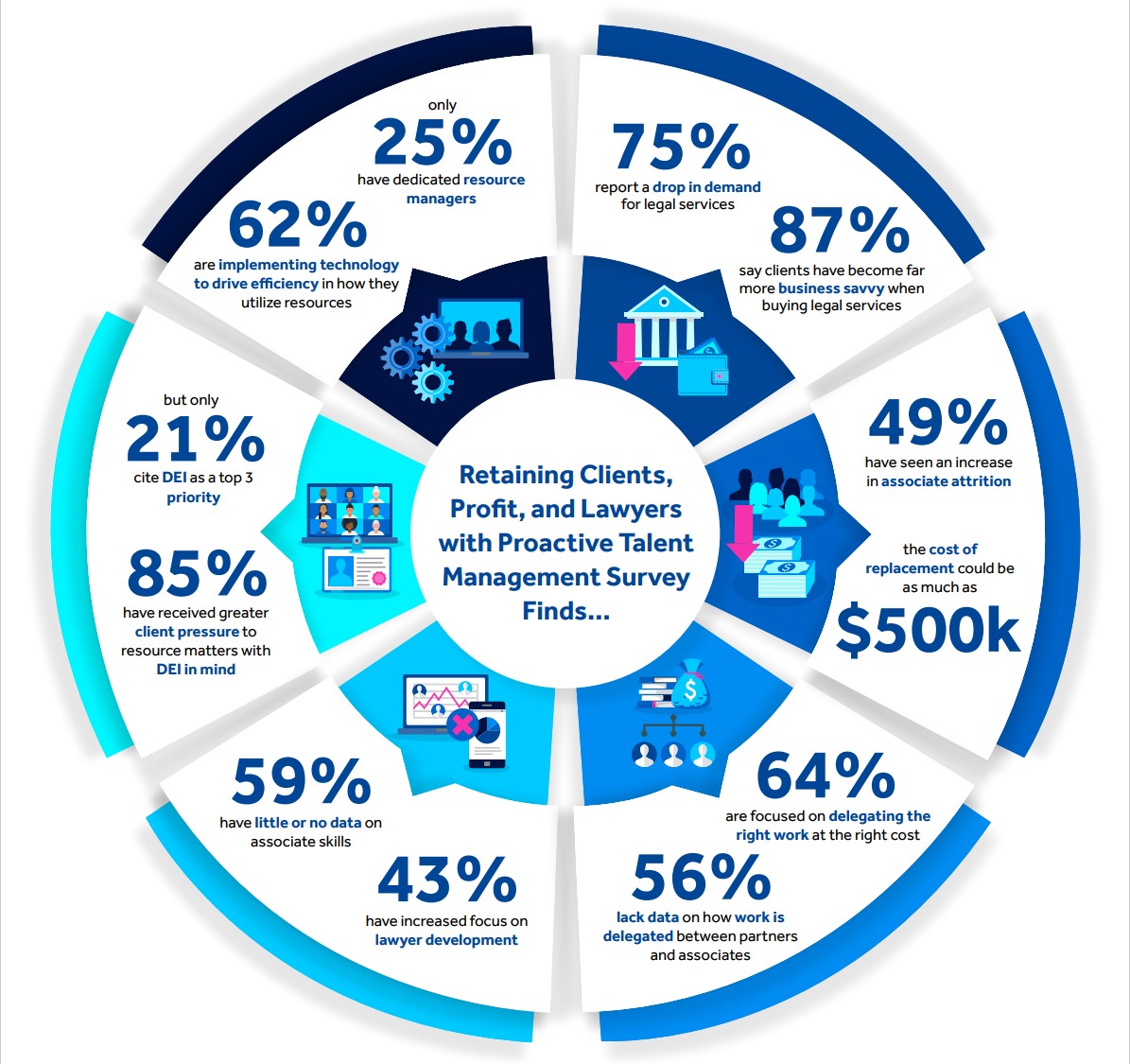
    If you’ve wondered how much replacing that associate or senior associate who just left you is going to cost, then a recent report from Big Hand provides the answer: circa $500k.

    That’s right, a cool half a million dollars!

    Those costs won’t always be upfront and apparent, they will include:

    • a possible increase in salary for your replacement associate over your previous associate’s salary (due to market pressure) – which is somewhat ironic as salary may well be the reason the old associate left you!
    • commissions to talent agents to find you said new associate
    • increasingly – signing on bonuses
    • training costs over the first 12 – 18 months to bring the new associate up to scratch on your firm’s systems and business development strategy.

    The list of actual and hidden costs here is almost limitless, and so the overall cost to your firm of replacing that departing associate/senior associate could actually be a lot more than $500k. Which begs the question:

    with 49% of surveyed firms having said they had experienced an increase in associate attrition, you have to wonder why this isn’t an area where more firms are focusing their attention?

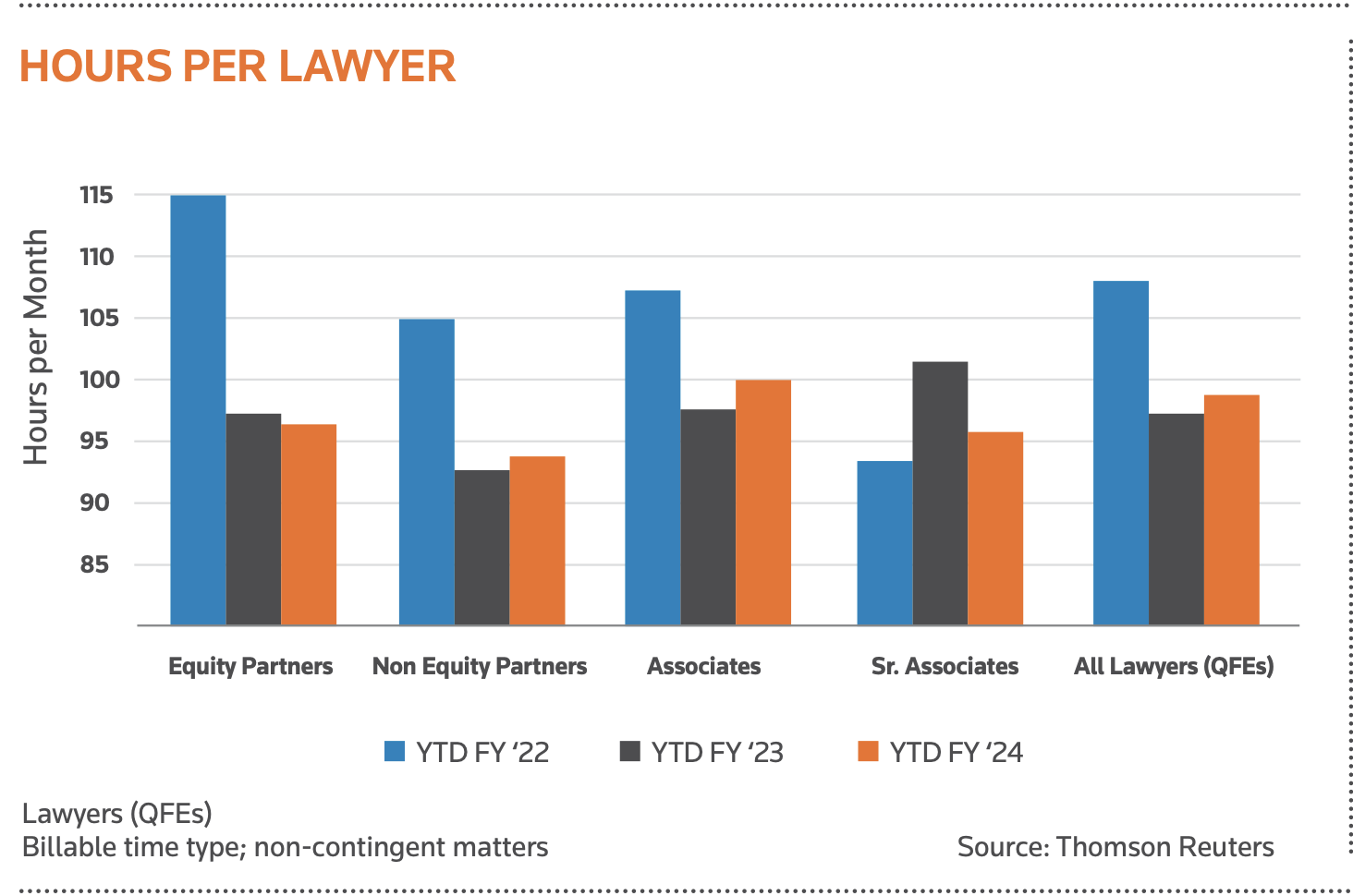
    You also have to ask: Does asking someone to work 2,000 billable hours a year have something to do with these attrition rates among associates?

    And with 75% of surveyed firms having said they have seen a drop in demand for legal services, is this a cost you really want to be incurring right now?

    If you need help looking at your firm’s strategy, how to retain associates and differentiating your practice from the crowd, get in touch!

    rws_01

    5 Questions to ask before responding to an RFP/RFT

    Our sister company – Bid Wizard – has published a blog on ‘5 Questions to ask before responding to an RFT/RFP‘ that some of you may enjoy reading.

    Their advice on ‘Do we have a team/depth of experience?’ is worth the ticket price alone!

    Feel free to reach out to me if this is a topic close to your heart!

    rws_01

    Where do AFAs rank in the cost savings pyramid?

    If you have been wondering where Alternative Fee Arrangements (AFAs) sit on the ladder of cost-saving for in-house counsel, wonder no more. This post [By-the-Hour Billing Torments Legal Departments. So Why Aren’t More Demanding Alternatives?] by Hugo Guzman on law.com yesterday (14/11/2023) will answer all your queries:

    • 66% of respondents said they plan to bring more work in-house as a cost-control strategy
    • 39% plan to shift work from big law firms to smaller ones,
    • 33% plan to leverage the use of technology and AI.

    And, drum-roll

    • Expanding AFAs ranked fourth, at 28%.

    Not sure how everyone else interprets that data, but it looks like a very sad state of affairs to me.

    Feel free to reach out to me if you want to discuss what this might mean to your business or law firm.

    rws_01